
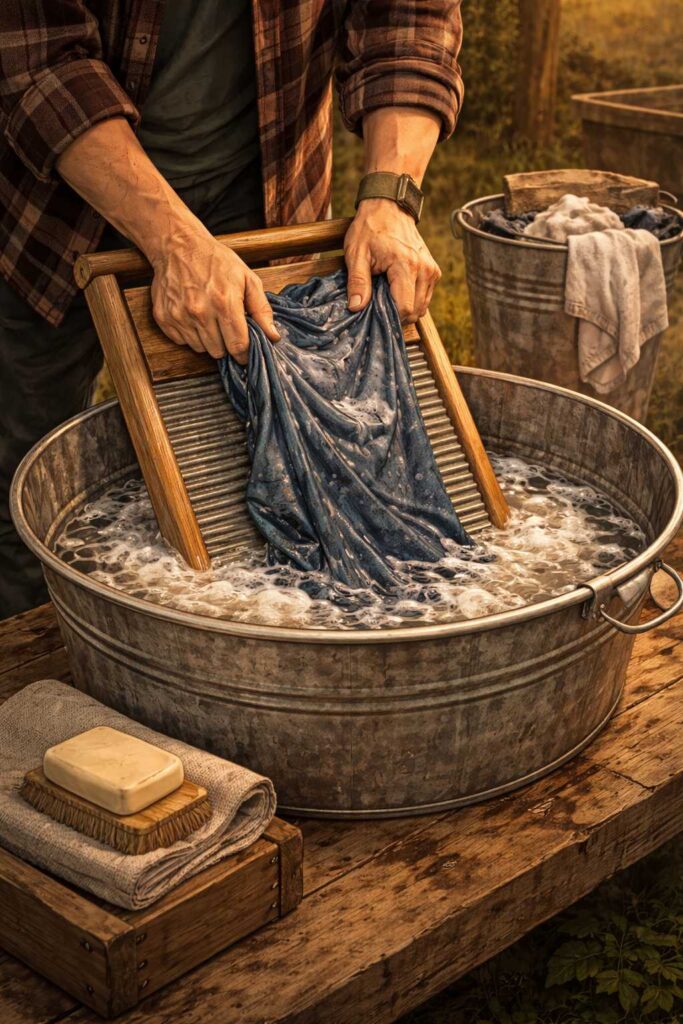
What It Is
A washboard is a simple hand laundry tool with a textured surface that helps scrub dirt from fabric using water, soap, and manual motion.
What It’s Used For
This is one of the most direct ways to wash clothing without machines or electricity.
Common uses include:
- Hand-washing everyday clothing
- Cleaning heavily soiled work clothes
- Washing small loads without running a full machine
- Maintaining clothing during power outages
- Cleaning delicate items using gentler surfaces like glass boards
It’s not complicated—water, soap, and a bit of effort.
Why It Matters
Clean clothes are easy to take for granted. Toss them in a machine, press a button, and move on. But when that system isn’t available, the job doesn’t go away.
It just gets harder.
A washboard brings it back to basics. No electricity, no plumbing requirements beyond water access, and no dependence on appliances that may not always be working.
That matters more than people expect.
Clothing isn’t just about comfort—it’s about hygiene, morale, and durability. Dirty clothes wear out faster, carry odor, and can become a problem if left unattended. Being able to clean them consistently, even in a limited setup, keeps things from sliding downhill.
It also changes how you think about laundry. Instead of large, infrequent loads, you’re working in smaller batches. That makes the work more manageable and keeps things from piling up.
There’s also a resilience factor. A washboard doesn’t break in the same way machines do. No motors, no electronics, nothing to fail beyond basic wear. It’s a tool you can rely on as long as you have water and soap.
It’s not about replacing modern convenience. It’s about having a fallback that keeps a basic part of life functioning when convenience disappears.
What to Know Before You Get One
Washboard laundry is simple, but a few practical points make a difference:
- It takes effort
You’re trading machine work for manual work. Small, regular loads make it manageable. - Surface type matters
Galvanized metal handles tougher fabrics. Glass works better for delicates. Tin falls somewhere in between. - Technique matters more than force
Steady, consistent motion cleans better than aggressive scrubbing. - Water management is part of the process
You’ll need a setup for washing and rinsing. Planning that ahead makes things smoother. - It’s best used consistently
Waiting until everything is dirty makes the job harder than it needs to be. - It complements, not replaces, modern systems
Even if you have a washer, this gives you a backup that doesn’t rely on it.
Check out the ever-classic, Columbus Washboard Co, the last and only washboard company in the U.S.A.
This isn’t a tool most people reach for today—but that’s exactly why it stands out. It handles a basic need in a simple, reliable way.
When systems go down, clean clothes still matter. A washboard makes sure that part of life keeps working.