
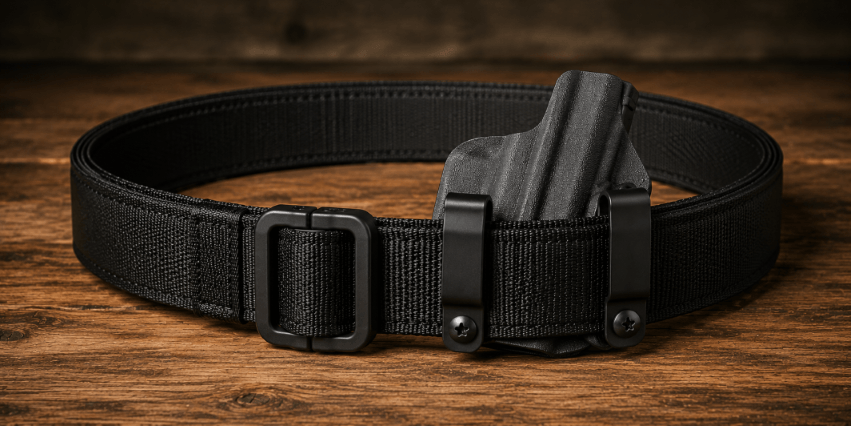
What Is a Concealed Carry Belt?
When most people begin carrying a concealed firearm, they focus on the firearm and holster. Both are important, but one often-overlooked piece of equipment can have just as much influence on comfort and concealment: the belt.
A concealed carry belt, sometimes called a gun belt or EDC belt, is designed to support the additional weight of a holstered firearm while maintaining its shape throughout the day. Unlike an ordinary fashion belt, a purpose-built carry belt resists twisting, sagging, and stretching under load.
Whether you carry a compact pistol, a full-size handgun, or other everyday equipment like a flashlight and spare magazine, your belt provides the foundation that keeps your carry system stable.
Why Use One?
The primary purpose of a concealed carry belt is stability.
A handgun, loaded magazine, quality holster, and other everyday carry equipment place considerably more weight on a belt than most people realize. Ordinary belts are designed to hold up clothing—not several pounds of gear concentrated in one location.
A quality gun belt distributes that weight more effectively, helping reduce sagging, shifting, and printing while keeping the holster in a more consistent position.
Many new concealed carriers blame their holster when the firearm becomes uncomfortable or moves throughout the day. In many cases, the belt is actually the weak link.
What Do Buyers Commonly Misunderstand?
One of the biggest misconceptions is that any sturdy-looking belt will work.
A concealed carry belt isn’t simply thicker leather or heavier nylon. It’s engineered to provide support while remaining comfortable enough for all-day wear.
Another misconception is that the stiffest belt is automatically the best. In reality, excessive rigidity can become uncomfortable, while a belt that’s too flexible may allow the holster to lean outward. The goal is balanced support that matches your firearm, holster, and daily routine.
It’s also helpful to think of your belt and holster as a system. Even an excellent holster can’t perform as intended if it’s attached to a belt that twists or sags. If you’re still evaluating holsters, our Holster Buyer’s Guide is a natural companion to this article.
How Do I Choose the Right Belt?
Rather than searching for the “best” concealed carry belt, focus on finding one that fits your needs.
Leather belts remain popular because they blend naturally with business and casual attire while offering excellent support. Nylon belts emphasize durability, weather resistance, and adjustability, making them a common choice for training, outdoor use, and casual wear.
Most concealed carry belts measure 1.5 inches wide, allowing them to fit standard belt loops and most holster clips. Wider belts can provide additional support but may not fit all clothing or holsters.
Buckle style is largely a matter of preference. Traditional buckles remain simple and reliable, while ratcheting systems allow small adjustments throughout the day that many concealed carriers find more comfortable.
Before purchasing, consider your typical clothing, firearm size, carry position, and how many hours you’ll wear the belt each day. The right choice is the one you’ll wear consistently.
Popular Concealed Carry Belt Manufacturers
Several manufacturers have developed strong reputations for producing quality concealed carry belts.
Cameleon
Cameleon focuses on concealed carry belts that combine practical firearm support with an everyday appearance suitable for discreet carry.
DeSantis
Best known for holsters and concealed carry accessories, DeSantis also produces purpose-built gun belts designed to complement everyday carry systems.
Groove Life
Groove Life is known for its flexible stretch design, offering all-day comfort while maintaining support for everyday concealed carry.
KORE Essentials
KORE Essentials is best known for its track-style ratcheting system, allowing precise adjustments for a secure, customized fit.
Shop KORE Essentials EDC Belts
Nexbelt
Nexbelt is widely recognized for its ratcheting adjustment system, allowing precise tension adjustments without relying on traditional belt holes.
Common Mistakes
A few simple mistakes can make concealed carry less comfortable than it needs to be.
Using an ordinary dress belt is perhaps the most common. While it may look sturdy, it often isn’t designed to support the concentrated weight of a firearm and holster.
Another mistake is overlooking compatibility. Before purchasing a belt, verify that it fits both your clothing (ie. belt loop dimension) and your holster attachments.
Finally, don’t treat the belt as an afterthought. A stable, comfortable carry system depends on every component working together.
Is a Concealed Carry Belt Worth It?
For many concealed carriers, yes.
A quality concealed carry belt can improve comfort, reduce printing, and help keep your holster positioned consistently throughout the day. While occasional carriers may be satisfied with a conventional belt, those who carry regularly often find that upgrading their belt provides one of the most noticeable improvements to their overall experience.
Like many pieces of everyday carry equipment, its value becomes apparent through regular use. When you’re ready, explore MidAtlanticMunition’s selection of belts to find one that fits your carry system.