
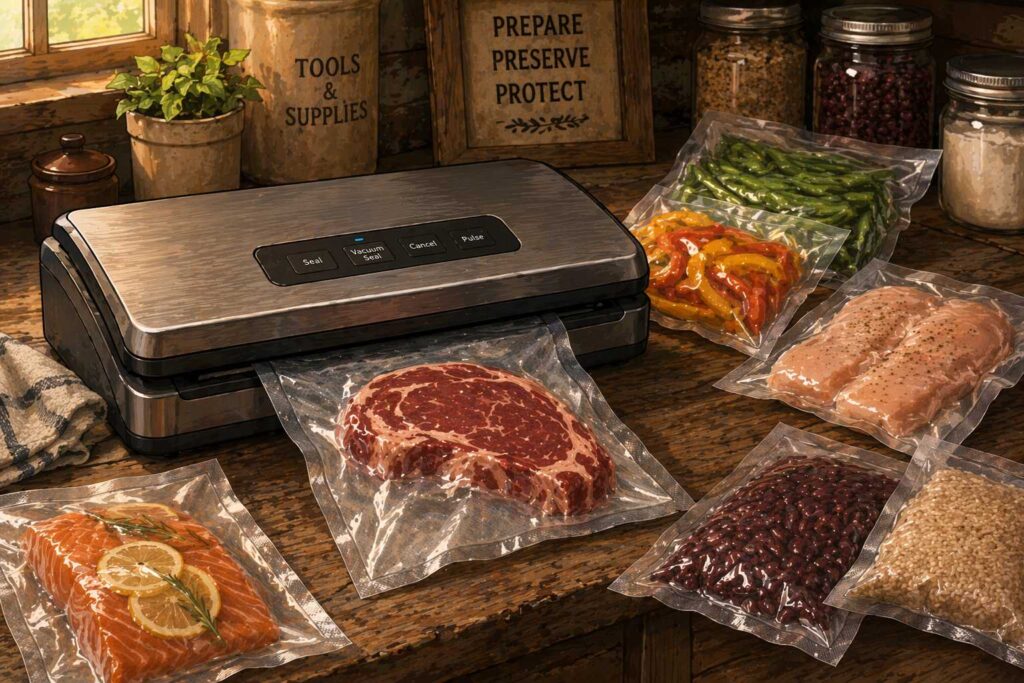
What It Is
A vacuum sealer is a device that removes air from specially designed bags or containers, slowing spoilage and extending the shelf life of food and other moisture-sensitive items.
What It’s Used For
Vacuum sealing is a practical method for preserving and organizing a wide range of household goods.
Common uses include:
- Extending the freezer life of meats, vegetables, and prepared meals
- Protecting dry goods like rice, beans, and pasta from moisture and pests
- Storing leftovers to reduce food waste
- Preparing bulk purchases for long-term storage
- Safeguarding important items such as matches, medical supplies, or documents from moisture
- Marinating meats more efficiently by improving flavor absorption
This versatility makes vacuum sealing a valuable addition to any preparedness-minded kitchen.
Why It Matters
Food preservation is a cornerstone of preparedness. While traditional methods like canning and fermentation remain essential, vacuum sealing offers a modern complement that enhances efficiency and flexibility.
By removing oxygen, vacuum sealing slows the growth of bacteria and prevents freezer burn. This means food retains its quality longer, allowing households to buy in bulk, store seasonal harvests, and reduce waste. In uncertain times, having a well-preserved food supply can provide both security and financial savings.
Beyond food, vacuum sealing protects moisture-sensitive items that are often overlooked. Emergency supplies such as medical kits, fire-starting materials, and important documents benefit from the same protection. This added layer of resilience ensures that critical items remain usable when they are needed most.
Although vacuum sealers rely on electricity, their benefits during normal conditions help build a stronger preparedness foundation. By extending the life of stored goods and improving organization, they allow families to maintain a deeper pantry and rotate supplies more effectively. This proactive approach reduces dependence on frequent shopping trips and enhances overall household resilience.
In essence, vacuum sealing bridges the gap between traditional preservation techniques and modern convenience, strengthening a household’s ability to manage resources wisely.
Here’s some top rated Vacuum Sealers
What to Know Before You Get One
While vacuum sealers are straightforward to use, a few considerations can help maximize their effectiveness:
- Power dependency: Most units require electricity, so plan for how and when you’ll use them as part of your overall preparedness strategy.
- Bag compatibility: Ensure access to appropriate bags or containers, as these are essential for proper sealing. Mylar is the king of materials with vacuum sealers.
- Moisture management: Very wet foods may require pre-freezing or special handling to achieve a proper seal.
- Storage space: Compact designs are convenient, but consider how frequently you’ll use the device when selecting a size.
- Maintenance and cleaning: Regular care helps maintain suction strength and prolongs the life of the unit.
- Complementary role: Vacuum sealing works best alongside other preservation methods rather than replacing them.
You need to read The Ultimate Guide to Mylar Bag Food Storage
A vacuum sealer is not about replacing traditional skills; it’s about enhancing them. By incorporating this tool into your routine, you create a more efficient and resilient system for managing food and essential supplies.