
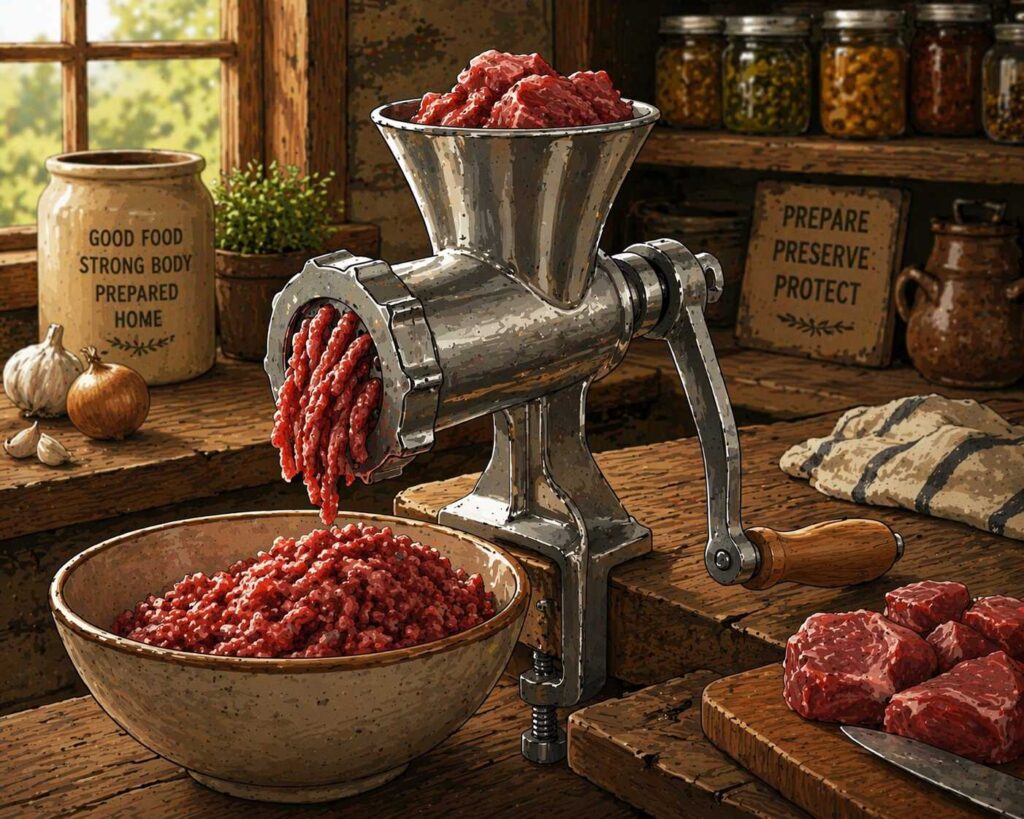
What It Is
A manual meat grinder is a hand-cranked kitchen tool that processes whole cuts of meat into ground form, allowing you to control texture, quality, and preparation without relying on electricity.
What It’s Used For
This tool provides a reliable way to transform raw meat into versatile ingredients for everyday cooking and long-term preservation.
Common uses include:
- Grinding beef, pork, venison, and poultry for meals
- Preparing meat for sausage, jerky, or smoked products
- Processing game after hunting
- Creating custom blends with preferred fat content
- Repurposing tougher cuts into usable ground meat
- Supporting meal prep for freezing or preservation
By giving you control over the grinding process, it opens up a wider range of food preparation options.
Why It Matters
Ground meat is a staple in many kitchens, but most people rely entirely on store-bought options. That convenience comes with trade-offs—limited control over quality, freshness, and availability. In times of disruption, access to pre-ground meat may become inconsistent or disappear altogether.
A manual meat grinder restores that capability.
With the ability to process whole cuts or harvested game, you gain independence from commercial processing systems. This is especially valuable for hunters, homesteaders, or anyone purchasing meat in bulk. It allows you to maximize the use of every portion, reduce waste, and tailor the final product to your needs.
The grinder also plays a key role in food preservation. Ground meat is often the starting point for sausages and other preserved foods such as smoked or cured products. These methods extend shelf life and diversify food storage options, strengthening overall preparedness.
Because it operates without electricity, a hand-cranked grinder remains functional during power outages or off-grid living. Its durability and simplicity make it a dependable tool that can serve a household for decades. Rather than relying on fragile, single-purpose appliances, you’re investing in a capability that endures.
Ultimately, this tool supports a more complete understanding of food preparation. It connects you to the process, builds practical skills, and ensures that you can continue producing essential food items regardless of external conditions.
What to Know Before You Get One
While manual meat grinders are straightforward, a few considerations can help you choose and use one effectively:
- Manual effort is required
Grinding meat takes steady cranking, especially for larger batches, but the process is predictable and manageable. - Stable mounting is essential
Clamp-down models need a sturdy surface to operate efficiently and safely. - Plate size affects texture
Different grinding plates produce varying consistencies, so selecting the right size improves results. - Preparation improves performance
Chilled, trimmed meat feeds more smoothly and reduces strain on the mechanism. - Cleaning is part of the routine
Regular disassembly and cleaning help maintain hygiene and extend the life of the grinder. - Durability matters
Solid construction and simple mechanical design ensure long-term reliability.
Lehman’s Clamp-Down Meat Grinder #10, Manual Hand-Cranked Stainless Steel Meat Grinder is a solid option.
A manual meat grinder isn’t just a kitchen accessory—it’s a practical investment in food independence. By enabling you to process and preserve meat on your own terms, it strengthens both everyday resilience and long-term preparedness.
Disclaimer: As an Amazon Associate we earn from qualifying purchases. This doesn’t change your price – it helps support the site.