
Not all hollow-point bullets are designed to expand. That might surprise shooters who associate the distinctive opening in a bullet’s nose with defensive handgun ammunition, but hollow points serve a much wider range of purposes.
Some are engineered to expand while retaining much of their original weight. Others are intended to fragment rapidly. Certain precision rifle bullets have small openings that result from their manufacturing process rather than an attempt to promote expansion.
Two bullets may look remarkably similar yet behave very differently.
Understanding those differences doesn’t require a degree in ballistics. It starts with recognizing three things: how a bullet is constructed, what its physical features accomplish, and what the manufacturer designed it to do.
What Actually Makes a Bullet a Hollow Point?
A hollow-point bullet has an opening or cavity at its nose. Beyond that basic characteristic, there’s considerable variation.
In a purpose-built expanding bullet, the cavity helps initiate deformation when the projectile encounters resistance. The nose is designed to open outward, increasing its frontal diameter under appropriate impact conditions.
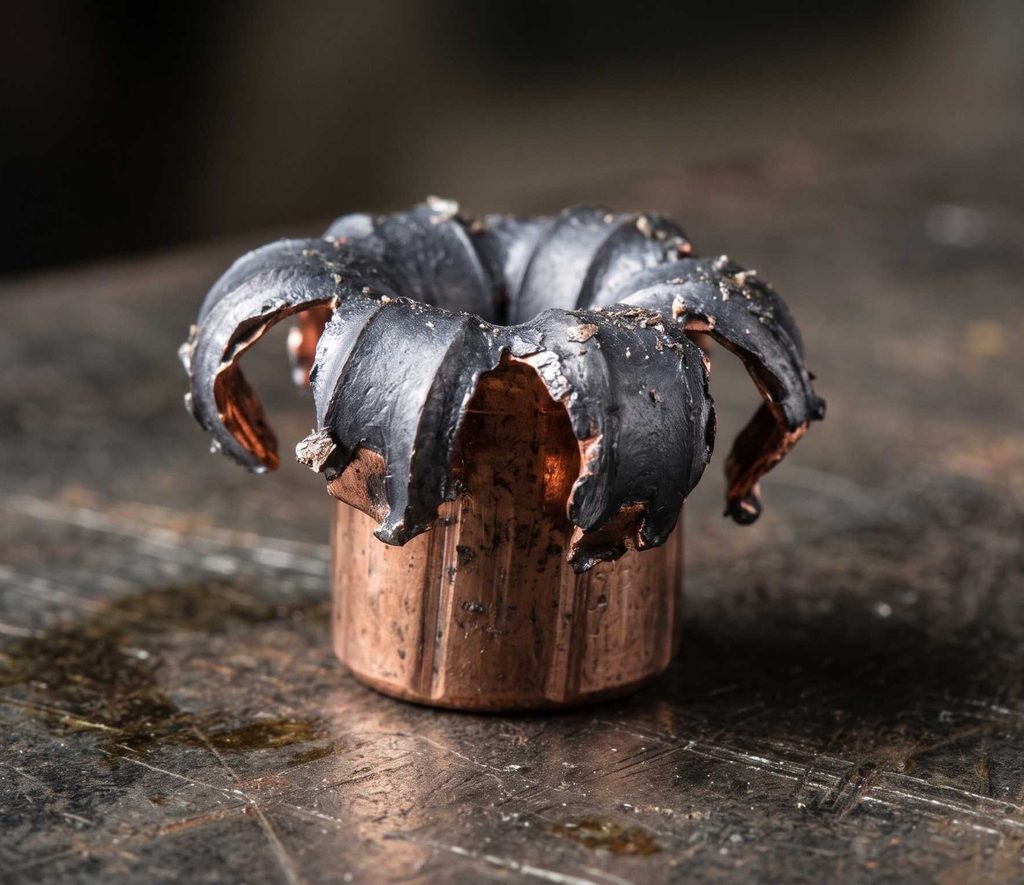
But a hollow opening doesn’t automatically produce that result.
Some match-grade bullets have very small openings created by the way their jackets are formed around their cores. Their purpose is manufacturing consistency and aerodynamic performance, not necessarily controlled expansion.
Even among expanding bullets, the internal differences can be substantial. Jacket thickness, core material, cavity shape, and bonding methods all influence how a projectile behaves.
That distinction explains why hollow point is a description of bullet geometry, not a complete performance specification.
Traditional Jacketed Hollow Points: JHP and SJHP
The jacketed hollow point, or JHP, is probably the design most shooters recognize.
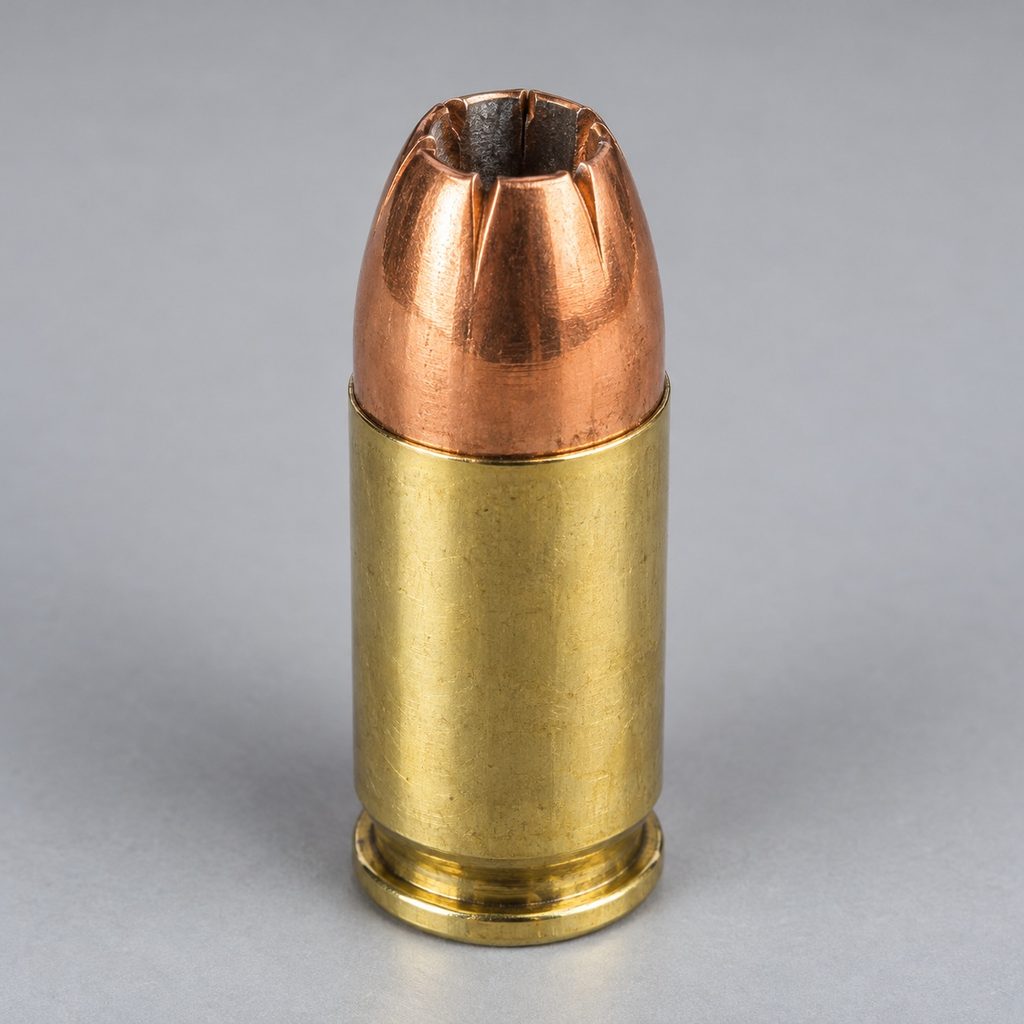
A conventional JHP typically has a lead core surrounded by a harder metal jacket, often made from a copper alloy. In an expanding JHP, the hollow cavity and surrounding construction are engineered to let the bullet’s nose deform upon impact.
JHP ammunition is widely associated with defensive handguns, although jacketed expanding hollow points also appear in rifle and hunting ammunition.
A related design is the semi-jacketed hollow point (SJHP). Instead of covering most of the bullet’s exposed surface, the jacket leaves more lead exposed near the nose. This construction has a long history in revolver ammunition.
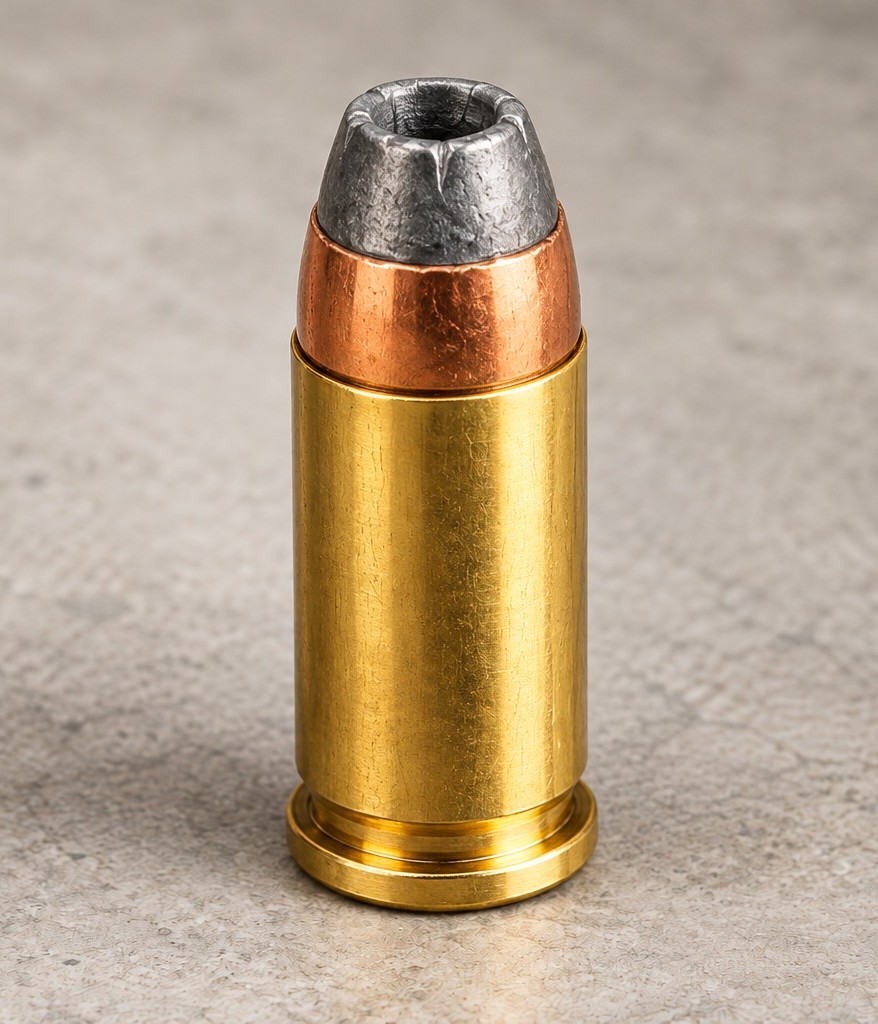
The exposed lead, partial jacket, and cavity shape can influence expansion, but the SJHP designation alone doesn’t establish how consistently a particular load will perform.
The meaningful difference between these bullets isn’t simply the amount of visible lead. It’s the interaction of the jacket, core, cavity, and intended operating conditions.
Bonded and Non-Bonded: What’s the Difference?
Not all jacketed hollow points hold their jackets and cores together the same way.
A bonded hollow point uses a manufacturing process that joins the jacket to its core. The objective is generally to help the bullet maintain structural integrity as it deforms, reducing the likelihood of the jacket separating from the core.
That can be useful in applications where maintaining bullet integrity and penetration are important design objectives.
A non-bonded hollow point does not use that bonding process. Its jacket and core may instead be retained through mechanical construction features, such as internal locking structures or jacket geometry.
Non-bonded doesn’t mean poorly made. Many well-engineered expanding bullets use non-bonded construction successfully. Nor does bonding automatically mean a bullet expands more.
Bonding primarily addresses how the bullet’s components remain together. Expansion characteristics still depend on the complete design and impact conditions.
Think of bonded and non-bonded as descriptions of how a bullet is built, rather than separate categories of what it’s supposed to do.
Match Hollow Points: HPBT and OTM
Here’s where the familiar idea of a hollow point becomes more complicated.
Some precision rifle ammunition uses bullets with small openings in their noses, even though controlled expansion isn’t their design objective.
Hollow point boat tail (HPBT) describes two physical features: an opening at the nose and a tapered rear section. The tapered base, called a boat tail, can reduce aerodynamic drag and help a bullet retain velocity during flight.
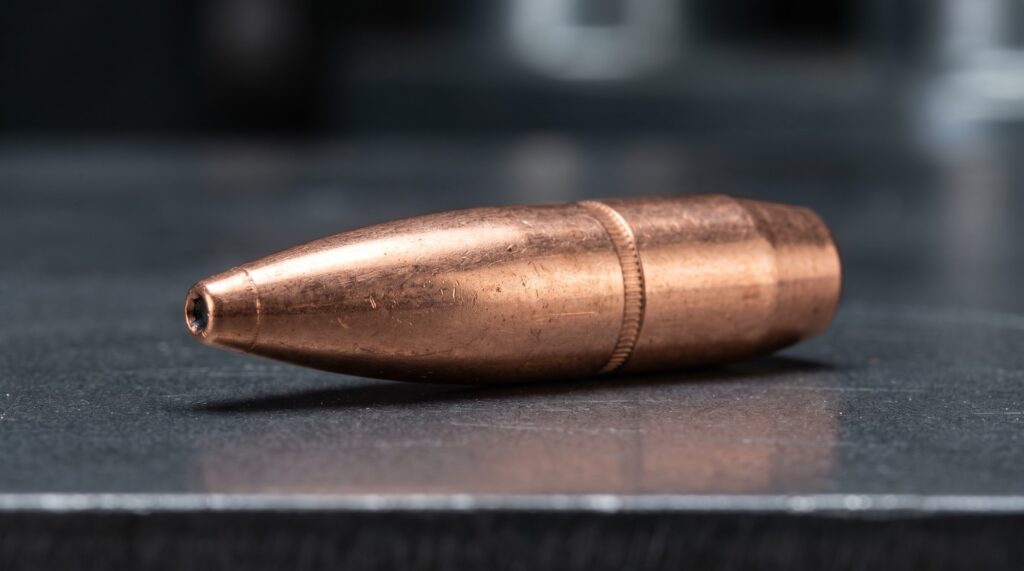
Open tip match (OTM) generally refers to precision-oriented bullets featuring a small opening associated with how their jackets and cores are manufactured.
These terms frequently overlap. A projectile can be both HPBT and OTM, but they aren’t interchangeable descriptions. HPBT identifies physical geometry; OTM identifies match-oriented construction and purpose.
For traditional match open-tip bullets, consistency and accuracy are the primary priorities. The nose opening is not equivalent to the expansion cavity in a purpose-built defensive or hunting hollow point.
There are important exceptions. Some hollow-point boat-tail bullets are specifically designed to expand, and some specialized projectiles combine precision-oriented construction with intended terminal effects.
The takeaway is straightforward: a rifle bullet labeled HPBT or OTM should not automatically be treated as an expanding hunting bullet. Its intended application must be established from the manufacturer’s specifications.
Polymer-Tipped Hollow Points
Some hollow-point bullets don’t look hollow at all. Instead of leaving the nose cavity open, manufacturers may insert a polymer tip that gives the projectile a pointed profile.
Depending on the design, that tip can improve aerodynamic consistency, protect the nose shape, or help initiate expansion by transferring force into the cavity upon impact.
Polymer-tipped expanding bullets are common in modern hunting ammunition, where manufacturers may seek a combination of aerodynamic performance and controlled terminal behavior.
But there is an important distinction here: not every polymer-tipped projectile is an expanding hollow point.
Polymer tips are also used on match-oriented bullets that prioritize consistent flight rather than expansion.
It’s the construction beneath the tip, together with the manufacturer’s design objective, that matters. A polymer tip is therefore another feature to understand—not a guarantee of a particular result.
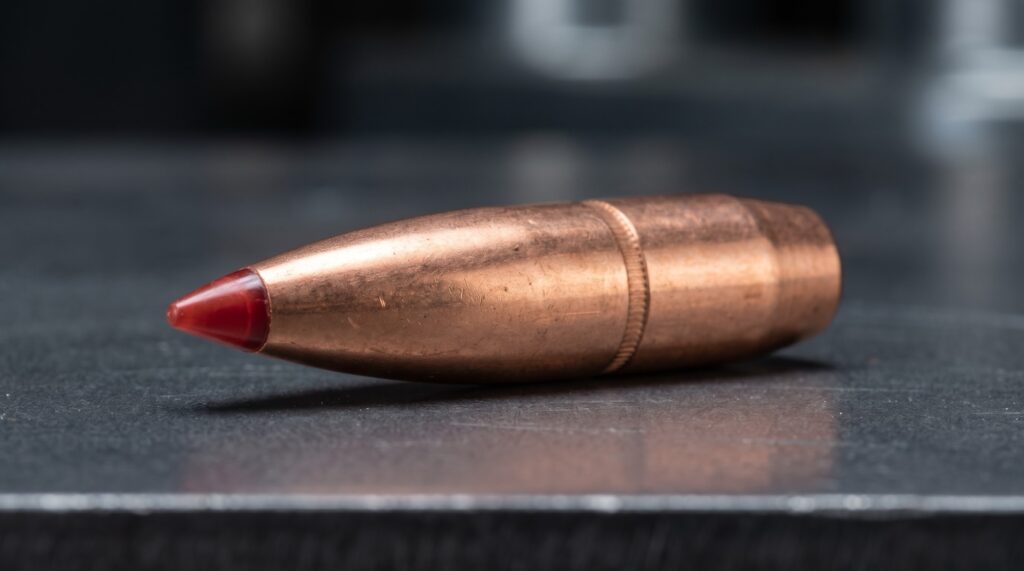
Monolithic Copper Hollow Points
Most traditional jacketed hollow points use a lead core enclosed by a separate jacket. Monolithic copper bullets take a different approach.
A monolithic projectile is made from a single piece of copper or copper alloy, rather than separate jacket and core components.
In expanding monolithic hollow points, the nose cavity is engineered to open under appropriate impact conditions. Some designs form outward-folding petals while maintaining much of the bullet’s original mass.
Because there’s no separate lead core and jacket, conventional jacket-core separation isn’t an issue. These designs are particularly relevant to hunters interested in lead-free ammunition, including those hunting in jurisdictions where lead projectiles are restricted. However, copper construction brings its own design considerations.
Expansion can depend heavily on impact velocity, and some monolithic designs require more velocity to deform as intended than certain lead-core alternatives. Requirements vary considerably among individual products.
It’s also important not to confuse all-copper construction with expansion. A solid-copper projectile isn’t necessarily a hollow point, and not every copper bullet is designed to expand.
Fragmenting Hollow Points: A Different Objective
Expansion and fragmentation are sometimes discussed as though they’re the same thing, but they describe different behavior.
An expanding bullet is generally designed to increase its frontal diameter while maintaining enough structural integrity to meet its intended performance goals. A fragmenting bullet is engineered to break apart or shed material under specified conditions.
Fragmenting hollow-point constructions are found in some varmint ammunition and other specialized projectile designs. For certain small-game or varmint applications, rapid fragmentation may be an intentional characteristic.
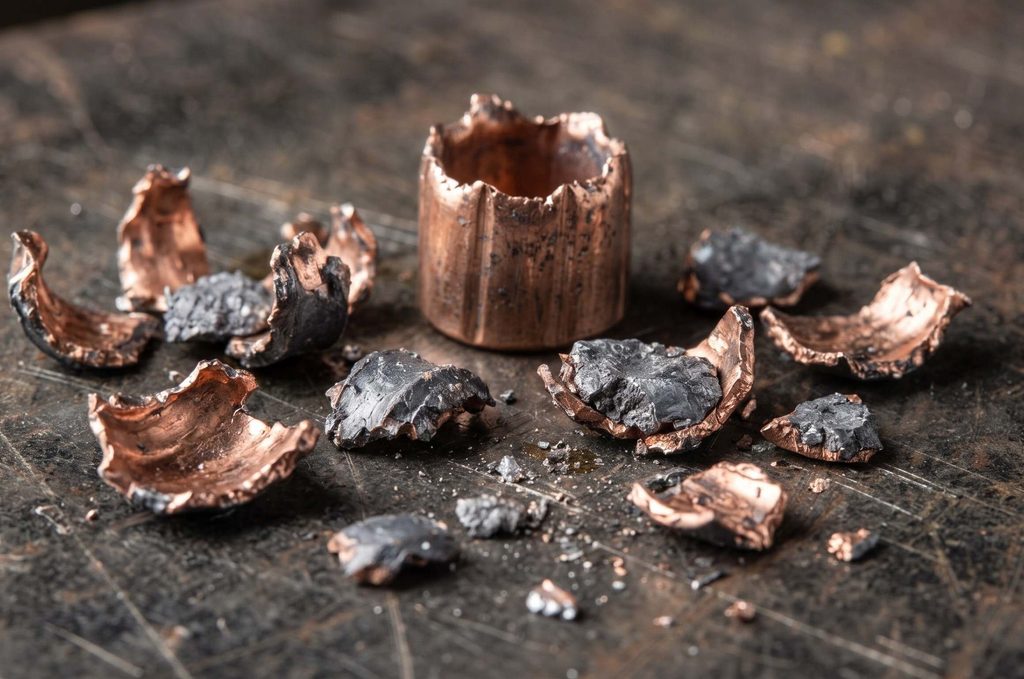
That doesn’t make fragmentation desirable for every hunting application. A bullet intended to fragment rapidly may have very different penetration and structural-integrity characteristics from a bullet engineered for controlled expansion and deeper penetration.
Fragmentation can also occur in projectiles not specifically marketed as fragmenting bullets. Whether that behavior is intended, predictable, or appropriate depends on the design.
This is another example of why appearance and broad terminology aren’t enough.
How Hollow-Point Designs Compare
The descriptions on ammunition packaging often combine construction, shape, and intended purpose. The following comparison provides a general reference.
| Design or Feature | Principal Distinction | Common Application |
|---|---|---|
| JHP | Jacketed construction with a hollow nose; often designed to expand | Defensive handgun ammunition; some hunting loads |
| SJHP | Partial jacket with exposed lead near the hollow nose | Traditional revolver ammunition |
| Bonded JHP | Jacket joined to core to improve structural integrity | Defensive, duty, and some hunting ammunition |
| Non-bonded JHP | Separate jacket and core retained through bullet construction | Defensive and hunting ammunition |
| HPBT | Hollow nose and tapered base; not necessarily expanding | Precision target shooting; some hunting designs |
| OTM | Small open tip associated with match bullet construction | Precision rifle shooting |
| Polymer-tipped | Tip inserted into nose; function depends on underlying design | Hunting, precision, and specialized ammunition |
| Monolithic copper HP | One-piece copper-alloy construction with an expansion cavity | Lead-free hunting and certain defensive loads |
| Fragmenting HP | Construction intended to break apart under specified conditions | Varmint and specialized ammunition |
slide left and right for more info
These aren’t nine mutually exclusive categories. For example, a bonded JHP can also be polymer-tipped, and an HPBT can also be an OTM projectile.
Why Intended Application Matters
Ammunition manufacturers don’t design every projectile to accomplish the same thing.
For defensive handgun ammunition, expanding hollow points may be engineered around the velocities and operating conditions typical of handguns. Design priorities commonly include expansion, penetration, and bullet integrity.
Hunting ammunition presents different considerations. A projectile intended for small varmints may prioritize rapid fragmentation, while one developed for larger game may emphasize controlled expansion, penetration, and retained mass.
Precision target ammunition presents another set of objectives. A match projectile is typically designed for consistent flight and accuracy, which does not establish predictable expansion.
These distinctions aren’t absolute. Hunting ammunition can be exceptionally accurate, and multiple construction approaches can serve similar applications.
What matters is understanding the engineering objective behind the particular projectile.
Why impact velocity matters
Impact velocity is how fast a bullet is traveling when it reaches its target. It differs from muzzle velocity, which is the speed measured as the bullet leaves the firearm.
As bullets travel, they generally lose velocity. An expanding projectile may perform differently at lower impact velocities than it does at higher ones. Some manufacturers specify minimum expansion velocities or recommended operating ranges for particular hunting bullets.
Construction and velocity work together. Neither a hollow cavity nor a particular material guarantees identical behavior across every set of conditions. This is especially important when evaluating ammunition for hunting, where the intended quarry and expected impact conditions both deserve consideration.
How to Shop for Hollow-Point Ammunition
Understanding the terminology makes ammunition listings considerably more useful. Instead of treating every product marked hollow point as interchangeable, begin with the manufacturer’s stated application.
If you’re shopping for handgun ammunition, distinguish defensive expanding designs from target-oriented products. Terms such as JHP, SJHP, and bonded provide information about construction, but don’t replace the manufacturer’s specific product description.
For hunting ammunition, pay attention to whether the projectile is intended for expansion, fragmentation, or another performance characteristic. If you’re considering lead-free ammunition, determine whether a monolithic design is appropriate for the intended use and expected operating conditions.
For precision rifle shooting, understand that an HPBT or OTM designation often reflects accuracy-oriented construction rather than predictable expansion.
Regardless of bullet type, always confirm the correct cartridge designation, firearm compatibility, and relevant manufacturer guidance.
You can explore ammunition and shooting supplies through the MidAtlanticMunition storefront. The goal isn’t simply to find ammunition labeled hollow point, or hp, but to identify ammunition whose construction and stated purpose match your needs.
Understand the Design, Not Just the Name
Hollow-point terminology becomes easier to navigate once you stop treating the opening in a bullet’s nose as its defining performance characteristic.
A traditional expanding JHP, bonded projectile, match open-tip bullet, polymer-tipped hunting design, and monolithic copper hollow point can have fundamentally different engineering objectives. And those differences matter.
The next time you’re comparing ammunition, look beyond the abbreviation on the box. Consider the construction, intended application, and manufacturer’s specifications.
The right question isn’t simply, “Is it a hollow point?” It’s, “What was this bullet designed to do?”