
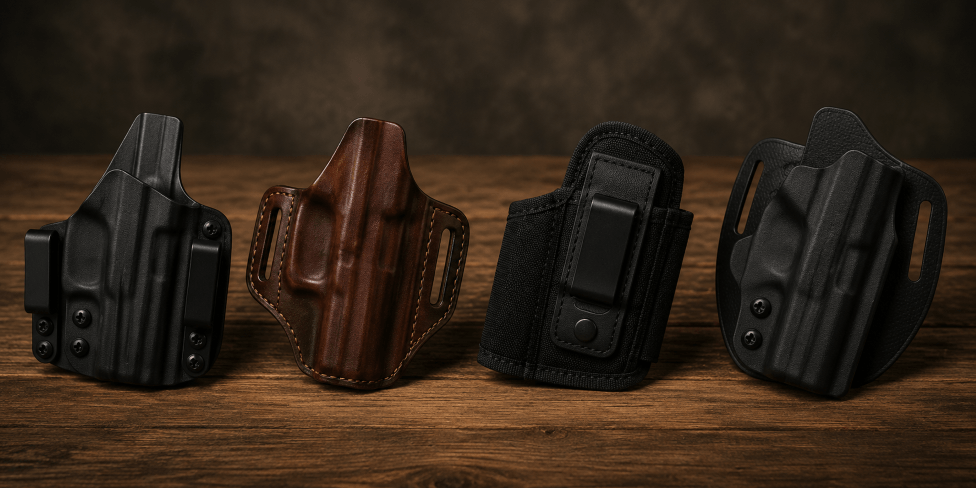
What Is a Concealed Carry Holster?
A concealed carry holster does far more than simply hold your firearm. It secures the handgun, covers the trigger guard, keeps the firearm consistently positioned, and allows it to be carried safely until needed.
A quality holster should retain the firearm during normal movement while still allowing a smooth, consistent draw. Just as importantly, it should fully protect the trigger from unintended contact while the firearm is holstered.
Whether you carry every day or only occasionally, the holster is one of the most important pieces of your carry system.
Why Does Your Holster Matter?
A good holster contributes to three things every concealed carrier wants: safety, comfort, and consistency.
A stable holster helps prevent unnecessary movement, keeps the firearm in the same position throughout the day, and allows you to establish a repeatable grip before drawing.
Comfort matters as well. An uncomfortable holster is less likely to be worn consistently, and consistency is one of the keys to effective concealed carry.
Your belt also plays an important role. A quality concealed carry belt provides the support a holster needs to perform properly, making the two components work best as a system.
When finished here, read Concealed Carry Belts: Why Your Belt Matters More Than You Think
What Is Retention?
Retention refers to how securely the holster holds the firearm.
Most concealed carry holsters rely on passive retention, using molded friction to keep the firearm in place while still allowing a smooth draw. This approach is common for everyday concealed carry because it balances security with accessibility.
Some holsters include active retention devices such as thumb releases or locking mechanisms. These are more commonly found on duty holsters used by law enforcement, military personnel, or others who may need additional firearm security during physical activity.
For most civilian concealed carriers, a properly fitted passive-retention holster is more than adequate.
How Do I Choose the Right Holster?
The best holster is the one designed specifically for your firearm and intended method of carry.
One thing many new carriers overlook is that holsters are not universal. Even firearms that appear nearly identical may require different holsters.
An additional consideration is weapon lights. If you plan to mount a light on your pistol, choose it before buying a holster, as most light-bearing holsters are molded for a specific firearm and light combination.
Read up on Weapon Lights: Choosing the Right Light for Defensive Use
Material is largely a matter of preference. Kydex offers excellent rigidity, durability, and consistent retention. Leather provides a traditional feel and can become very comfortable with use. Hybrid holsters combine characteristics of both.
You’ll also need to choose a carry position, such as strong-side hip or appendix carry. The right choice depends on your body type, clothing, comfort, and experience.
Whatever style you choose, verify that it completely covers the trigger guard and securely retains the firearm.
Popular Holster Manufacturers
Several manufacturers have built strong reputations for producing quality concealed carry holsters.
Safariland
Safariland is widely respected for its duty and professional-grade holsters, particularly those featuring active retention systems.
Alien Gear Holsters
Alien Gear offers a wide variety of concealed carry holsters, including modular systems that allow users to adapt their setup to different carry positions.
Bravo Concealment
Bravo Concealment specializes in Kydex holsters designed for everyday concealed carry with an emphasis on simplicity and durability.
Shop Bravo Concealment Holsters
DeSantis
DeSantis has been producing concealed carry holsters for decades and offers both leather and Kydex options across a broad range of firearm models.
Crucial Concealment
Crucial Concealment focuses on minimalist Kydex holsters designed for discreet everyday carry and straightforward functionality.
Shop Crucial Concealment Holsters
Common Holster Mistakes
Many first-time buyers choose a holster based primarily on price.
A poorly fitted holster can shift excessively, become uncomfortable, or fail to retain the firearm properly. Another common mistake is purchasing a generic “one-size-fits-most” holster instead of one molded for a specific firearm.
It’s also important to avoid holsters that leave any portion of the trigger exposed. Trigger protection is one of a holster’s primary safety functions and should never be compromised.
Finally, remember that even the best holster cannot compensate for poor training. Regular dry-fire practice with an unloaded firearm and safe drawing techniques are essential for building consistency. Our Shooting Drills and Firearms Fast Track articles provide a natural next step once you’ve selected your equipment.
Is a Concealed Carry Holster Worth It?
Absolutely.
A quality holster improves safety, comfort, concealment, and consistency every time you carry. More importantly, it helps ensure your firearm remains secure and accessible while protecting the trigger throughout daily use.
Choosing a holster designed for your firearm, carry style, and daily routine is one of the best investments you can make as a concealed carrier. When you’re ready, explore MidAtlanticMunition’s selection of holsters to find one that fits both your firearm and the way you carry every day.