
The New Hunter’s Guide · Part 5 of 8
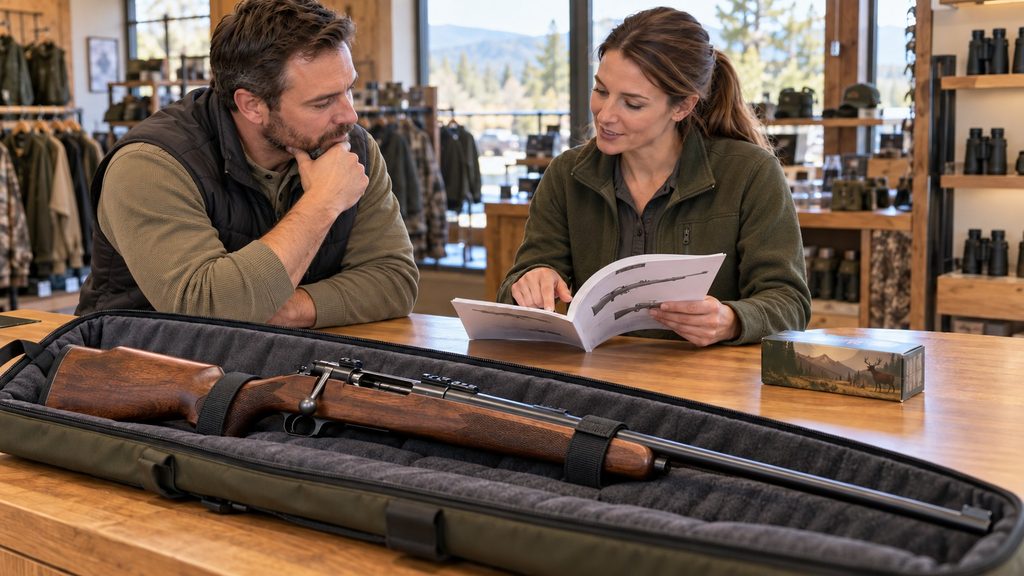
Walk up to a firearm counter without knowing what you need, and you can leave with more questions than you brought. Rifle or shotgun? Which caliber? What do all those numbers on the ammunition boxes mean?
You don’t have to understand every option to make a sound first choice. Start with your intended game and the rules where you’ll hunt, then choose a firearm you can handle comfortably and ammunition suitable for both the firearm and the animal.
That gives you a useful way to narrow the choices before spending money.
Let the Hunt Narrow Your Options
The animal and location you selected earlier in this series give this decision a starting point. Confirm the permitted firearms and ammunition for that species, season, and property with the responsible wildlife agency. A firearm being legal to own does not establish that it is permitted on your particular hunt.
Rifles and shotguns serve different purposes. A rifle fires a single bullet and may suit pursuits ranging from squirrels to deer, depending on its chambering—the specific cartridge it is designed to use. A small-game rifle and a deer rifle can look similar while requiring very different ammunition.
Shotguns commonly fire a load of pellets called shot. They’re widely used for birds and some small game. Certain shotgun setups can also fire a single projectile called a slug, including for deer hunting where permitted. That versatility depends on the particular firearm, barrel, and ammunition; it does not mean every shotgun can use every shotgun load.
If you’re joining a mentored hunt, ask the organizer what equipment suits that outing and whether anything is provided. You may discover that you can learn with a suitable loaner before buying.
Already own a firearm? Have a qualified instructor or knowledgeable dealer help determine whether it fits the intended hunt. An inherited firearm with an uncertain condition deserves a qualified gunsmith’s inspection before use. Familiarity, availability, and sentimental value don’t establish suitability.
Choose Something You Can Handle Comfortably
A firearm should fit the person using it. Under an instructor’s or dealer’s supervision, evaluate an unloaded firearm for comfortable reach, balance, and access to its controls. Keep it pointed in a safe direction and your finger outside the trigger guard.
Can you shoulder it without stretching? Can you operate the controls comfortably? Can you support its weight steadily? Mention left-handed use, limited hand strength, or shoulder discomfort early. Those details help narrow the choices.
Recoil is the backward movement you feel when firing. A firearm that leaves you bracing for discomfort can make learning harder. More power does not automatically make something a better beginner choice. Federal’s guidance for new deer hunters emphasizes manageable recoil and the ability to shoot well.
When possible, arrange supervised range time before purchasing. Holding a firearm at a counter tells you about fit; firing it with appropriate eye and hearing protection tells you considerably more.
If you don’t know anyone who shoots, contact a local range or qualified instructor:
“I’m an adult beginner preparing for my first hunt. Can you help me compare suitable firearms and arrange an introductory session before I buy?”
Ask whether rental or loaner equipment is available. You don’t need to arrive with your own firearm to ask for instruction.
Match the Ammunition to the Firearm—and the Hunt
Ammunition has two separate jobs to satisfy: it must be safe for your particular firearm and suitable for your intended use.
Start with the firearm’s markings and owner’s manual. Match the full cartridge designation, not just a familiar number or something that looks close. Similar names and appearances do not establish interchangeability. If anything is unclear, ask the manufacturer or a qualified professional before purchasing or loading ammunition. The National Shooting Sports Foundation explains why this match matters in its guidance on using the correct ammunition.
Shotgun ammunition requires more than matching the gauge, such as 12 gauge or 20 gauge. Shell length and compatibility with the barrel and choke—the constriction near the muzzle that influences the shot pattern—also matter. Follow the instructions for your exact firearm and choke, particularly when considering slugs or different shot materials.
Once compatibility is established, look at the ammunition manufacturer’s stated purpose. A cartridge is the complete rifle round; the bullet is the projectile it fires. Two boxes can carry the same cartridge designation while containing bullets designed for different tasks.
For deer, look for ammunition specifically intended for deer or comparable game. Target ammunition, including common full-metal-jacket loads, should not be treated as interchangeable with hunting ammunition. Likewise, a load intended for small varmints is not automatically appropriate for a larger animal. Bullet construction matters alongside cartridge choice.
For shotgun hunting, the animal, ammunition, and legal requirements must also agree. Waterfowl and coot hunting requires approved nontoxic shot under federal rules. Check additional state and property restrictions rather than assuming any box labeled “hunting” is acceptable everywhere.
You don’t need to memorize the ammunition aisle. You do need to be able to explain why the box you choose belongs with your firearm and your hunt.
Buy With a Plan for Using It
Before committing to a firearm, check the availability and cost of suitable ammunition. You’ll need ammunition for learning and practice as well as the hunt itself. Include instruction, secure storage, and any necessary sighting equipment in the purchase decision.
Our Firearms Fast Track guides offer additional introductions to topics such as optics, cleaning, storage, and ammunition, with links to relevant equipment. Use the guide that answers your next question; you don’t need to work through the entire collection before getting started.
Once you know your firearm’s requirements, our Current Ammo Recommendations page provides starting points for comparing available options. It includes practice and defensive ammunition alongside field offerings, so check each recommendation’s intended use. A “Top Pick” in a particular category is not automatically a hunting recommendation.
If you’re unsure which listing fits, contact MidAtlanticMunition with your firearm’s make, model, exact chambering, intended game, and any ammunition restrictions you’ve confirmed. Those details let us help you narrow the ammunition choices rather than guess at what you need.
Start with enough suitable ammunition to evaluate it with instruction before making a large purchase. Less expensive compatible practice ammunition can have a place, but you must also confirm performance with the exact load you intend to hunt with. Different rifle loads can change where shots land; shotgun loads also need evaluation in your particular setup.
Your first purchase has a clear purpose: a suitable firearm you can operate responsibly, paired with ammunition selected for the hunt you’re preparing to take. You should be able to explain that choice in ordinary language.
Now you can move from choosing equipment to learning what you can reliably do with it. Preparing for Your First Hunt: Practice, Scouting, and Planning, Part 6 of The New Hunter’s Guide, brings that preparation together before you head into the field.
Related Questions New Hunters Ask:
- What is the best hunting firearm for a beginner? Choose a firearm that is legal and suitable for the game you plan to hunt and that you can handle comfortably and learn to use well.
- Should a new hunter start with a rifle or a shotgun? That depends on what you plan to hunt, since rifles and shotguns are suited to different animals, hunting methods, and local regulations.
- How do you choose the right caliber for hunting? Start with the animal you plan to hunt and local regulations, then choose a suitable cartridge in a firearm you can handle and practice with comfortably.
- How do you choose the right ammunition for hunting? Make sure the ammunition exactly matches your firearm and uses a projectile designed for the animal you intend to hunt.
- Can you use target ammunition for hunting? Target ammunition should not automatically be treated as hunting ammunition, because projectile construction and legal requirements matter as much as cartridge designation.