
Choosing an AR-pattern rifle often leads to debates over optics, barrel length, furniture, caliber, and brand. Then another specification appears on the page: gas system length. Carbine, mid-length, and rifle-length systems each have real strengths, tradeoffs, and ideal applications depending on barrel length, intended role, and overall tuning.
What a Gas System Actually Does
The gas system uses pressure from a fired round to cycle the action. That energy unlocks the bolt, drives the carrier rearward, and chambers the next round.
Check out Direct Impingement vs. Piston: Understanding Rifle Gas Systems
Where gas is tapped from the barrel influences timing and operating characteristics. In practical terms, gas system length can affect:
- recoil impulse feel
- reliability margins with different ammunition
- parts wear over time
- suppressor behavior
- how the rifle feels during rapid fire
Gas system length matters, but it is only one piece of the puzzle. Buffer weight, springs, gas port sizing, ammunition, maintenance, and component quality matter too.
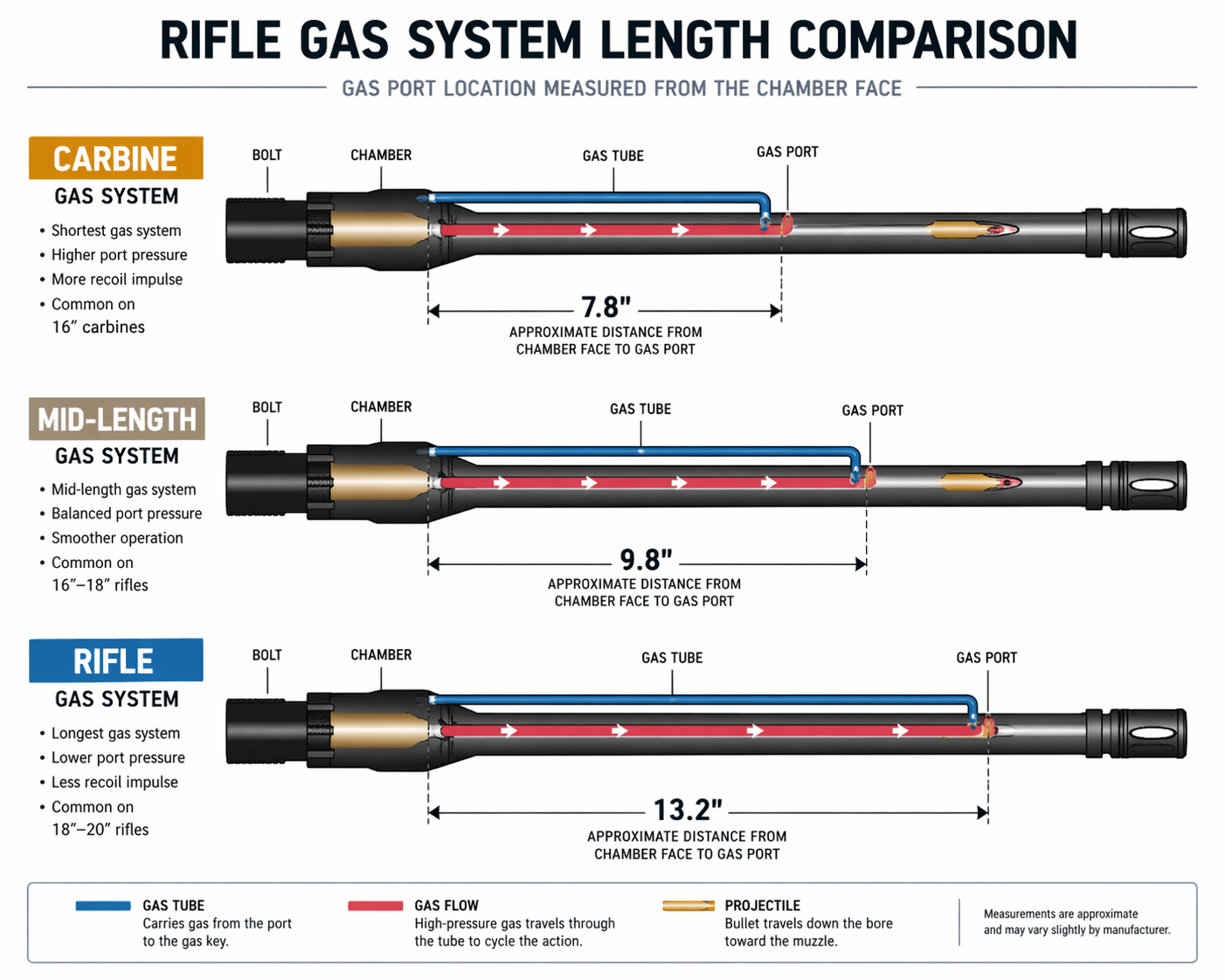
Carbine-Length Gas Systems
Carbine-length systems are common, proven, and strongly associated with shorter rifles. They have decades of widespread use behind them and remain a standard for a reason.
They typically shine on compact setups where maneuverability matters most. Shorter rifles used for defensive roles, vehicle use, or tight spaces often pair naturally with carbine systems.
Common strengths include:
- popular on 10.3″, 10.5″, 11.5″, 12.5″, and 14.5″ barrels
- broad parts compatibility
- deep aftermarket support
- strong hard-use reputation
On some 16-inch rifles, a carbine system may feel sharper or run more aggressively than a longer system, depending on tuning. Properly balanced, however, a carbine-length system can still perform extremely well.
For shooters wanting a compact, lively rifle, carbine length remains highly relevant. Somewhere, the engineering gods at NSWC Crane still smile knowingly at 10.3 inches.
Mid-Length Gas Systems
Mid-length systems became extremely popular as 16-inch rifles grew into the dominant general-purpose AR format. Many shooters view mid-length as a practical balance point between compactness and smoother operation.
On many 16-inch rifles, mid-length systems are often associated with a more moderate recoil impulse and a steady, controllable feel. That is one reason they are so common in modern civilian rifle builds.
Typical strengths include:
- excellent match for many 16-inch barrels
- balanced feel for training and range use
- broad commercial availability
- versatile all-around performance
Mid-length is not automatically better than carbine length. A quality carbine setup can run beautifully, and a poorly built mid-length can disappoint. Quality still matters more than labels.
For many first-time buyers seeking one rifle that covers multiple roles, mid-length is often a smart place to start.
Rifle-Length Gas Systems
Rifle-length systems are the classic full-size configuration, commonly paired with 18-inch and 20-inch barrels. They remain respected because they still do certain things very well.
Longer systems on longer barrels are often appreciated for a steadier shooting feel and smoother cycling characteristics. They are frequently chosen for rifles focused on accuracy, field use, or deliberate shooting.
Common strengths include:
- natural pairing with 18-inch and 20-inch barrels
- smoother impulse on longer setups
- strong velocity potential from longer barrels
- excellent fit for precision-oriented rifles
The tradeoff is size. Full-length rifles are less compact and less convenient in tight spaces than shorter carbines. For some users that matters greatly, for others it does not.
If your priorities are stability, velocity, and longer-range performance, rifle length still makes a strong case.
Quick Barrel Pairing Guide
There are exceptions, but common pairings often look like this:
- 10.3″ to 14.5″ barrels: carbine-length
- 16″ barrels: carbine or mid-length
- 18″ to 20″ barrels: rifle-length
These are common patterns, not laws. Good manufacturers can make many combinations work well.
Suppressor Considerations
Adding a suppressor changes system behavior by increasing backpressure. A rifle that feels perfect unsuppressed may run faster, dirtier, or more aggressively once suppressed.
Depending on the setup, shooters may benefit from:
- heavier buffers
- spring changes
- adjustable gas blocks
- suppressor-focused tuning
- dedicated suppressed uppers or rifles
This is one reason blanket statements about gas systems rarely tell the whole story.
Which One Should You Choose?
Choose carbine length if you want a shorter rifle, compact handling, or a setup centered around shorter barrels.
Choose mid-length if you want a balanced 16-inch rifle that covers most civilian uses well.
Choose rifle length if you want a longer rifle focused on steadier shooting, velocity, or precision-oriented roles.
Final Truth
Gas-system length makes the most sense when considered as part of the complete rifle. Barrel length, gas-port sizing, buffer weight, spring rate, ammunition, and intended use all influence how the finished system behaves.
There is no universally superior gas system. There are only appropriate choices for specific rifles and specific jobs. That is why experienced shooters often appreciate more than one setup. A short carbine, a balanced 16-inch rifle, and a longer full-size rifle each bring something useful to the safe.
Buy quality, tune honestly, and ignore most internet absolutism.
Super new? Check out Setting Up Your First AR: 15 Essentials to Get You Started