
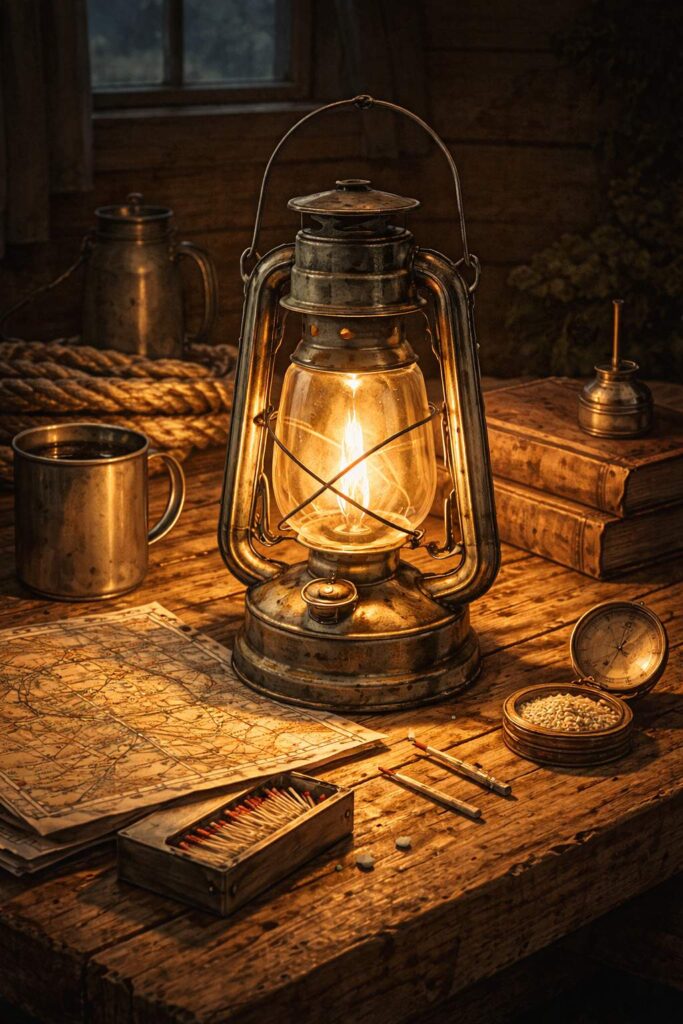
What It Is
A kerosene lantern is a simple, fuel-powered light that uses a wick and flame to produce steady illumination without electricity.
What It’s Used For
These lanterns are built for dependable light in places and situations where power isn’t available.
Common uses include:
- Lighting rooms during power outages
- Providing steady light for evening tasks
- Use in cabins, campsites, and outbuildings
- Backup lighting in garages, workshops, or barns
- Low-level ambient light during extended outages
It’s not bright like modern lighting—but it’s consistent and predictable.
Why It Matters
Most people don’t think about lighting until it’s gone.
Flip a switch, and everything works. But when the power drops—whether for a few hours or a few days—light becomes something you have to provide yourself.
Battery-powered lights work, but they come with limits. Batteries drain, devices fail, and replacements aren’t always on hand. A kerosene lantern doesn’t have that problem.
As long as you have fuel and a way to light it, you have illumination. No charging, no electronics, no dependency on anything outside your control. That kind of reliability matters.
It also changes how you use light. Instead of flooding a space, you work within a smaller, steady glow. That encourages more deliberate use—lighting what you need, when you need it, without waste.
There’s also a long track record behind it. These lanterns have been used for generations in homes, barns, and camps. The design hasn’t changed much because it doesn’t need to. It works.
In a preparedness setup, that’s the goal—simple tools that do their job the same way every time.
What to Know Before You Get One
Kerosene lanterns are straightforward, but a few practical points make a difference:
- Fuel is part of the system
You’ll need to store kerosene or lamp oil safely and keep it on hand. - Light output is limited
It’s enough for tasks and movement, not full-room brightness. - Ventilation matters
You’re dealing with an open flame. Use it in a space that allows for airflow. - Wick maintenance is simple but necessary
A trimmed, properly set wick keeps the flame steady and reduces smoke. - Glass and metal parts get hot
Placement matters. Treat it like any other open-flame device. - It’s about consistency, not convenience
Lighting it takes a moment, but once it’s going, it stays steady.
Check out this Rayo Redi-Light 14 inch Kerosene Lantern Lamp
This isn’t modern lighting, and it’s not meant to be.
It’s a fallback that doesn’t rely on anything complicated. When the grid goes down, it gives you a way to keep working, moving, and maintaining a sense of normalcy without needing much in return.