
The New Hunter’s Guide · Part 7 of 8
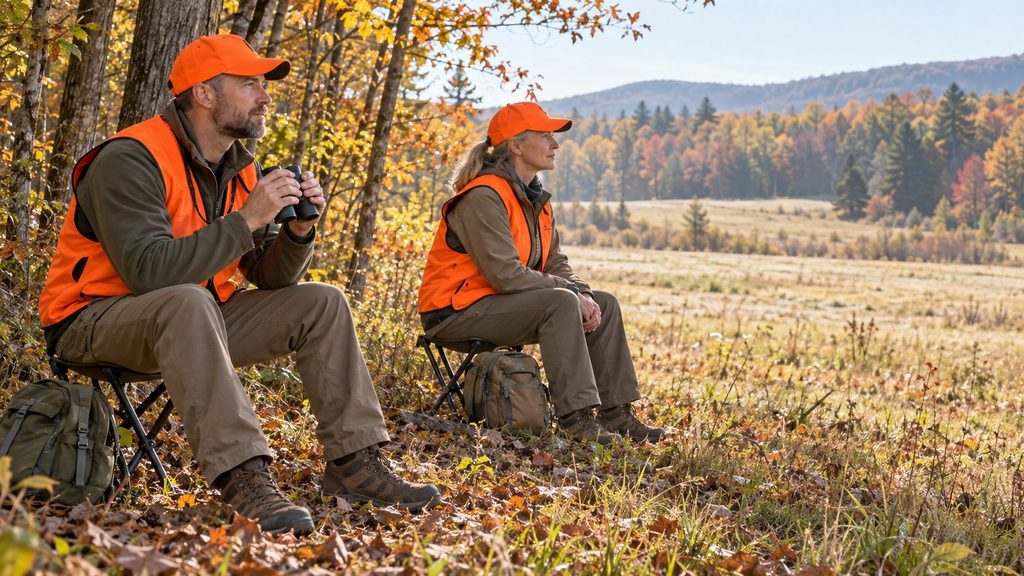
The first few minutes of a hunt can feel surprisingly ordinary. You park, adjust your pack, exchange a few words, and start walking. Then an unfamiliar sound or your first glimpse of movement makes everything feel new again.
Expect a first hunting trip to include observation, waiting or walking, and decisions about what you can safely and legally do. You may see game without getting a suitable shot, or finish the outing without seeing the animal you came for. Those possibilities belong in your expectations alongside the excitement.
The preparation covered in Part 6 gives you somewhere to begin. Now the task is to use that preparation while paying attention to what is actually happening around you.
Arrive With Time to Settle In
Give yourself room to park, check posted notices, complete any required check-in, and get organized without rushing. Keep entrances clear and respect the property’s parking arrangements. If the access route is closed or the conditions differ from what you expected, stop and reassess.
With a mentor or hunting partner, briefly confirm where you’re going, where each person will be, and how you’ll communicate. Ask what happens if you need a break or want to end the outing. It is easier to settle those questions together than to improvise after separating.
Keep your firearm unloaded while getting organized at the vehicle. Loading, unloading, and carrying it in the field should follow your training, its manual, and applicable rules. If you cannot confidently perform those tasks, ask for instruction before proceeding. The National Shooting Sports Foundation’s safe gun-handling guidance is a useful reference.
You don’t need to hide being new. “Can you explain what we’re doing next?” is a reasonable question, even when the answer seems obvious to someone with experience.
Let the Hunt Find Its Pace
A seated deer hunt may involve long periods of watching the same patch of woodland. A rabbit or upland-bird hunt may involve repeated walks through suitable cover. Waterfowl hunting can alternate between quiet conversation and sudden activity overhead.
These different rhythms were introduced in Choosing Your First Hunt. In the field, you begin discovering how they feel to you.
During quiet stretches, notice the smaller details: birds moving through branches, leaves shifting in the wind, tracks along the path, or changes in visibility. Ask your mentor what they are watching for when conversation is appropriate. You’re learning how to observe, even when your intended game is absent.
An unfamiliar sound can seem louder than expected. Movement can turn out to be another hunter, a dog, or an animal you cannot legally take. Give yourself time to identify what you’re noticing.
Patience also has practical limits. Drink water, eat when needed, and speak up about cold, discomfort, or fatigue. Ask where to take a bathroom break rather than quietly wandering away from your agreed position. An outing can be shortened or adjusted; you don’t need to prove yourself by becoming exhausted.
If you encounter other hunters, give them space and communicate calmly when necessary. Avoid walking into an occupied setup or changing positions without telling your own group. Shared land requires attention to the people using it as well as the wildlife.
Seeing Game Does Not Mean You Must Shoot
An animal appearing can bring excitement, hesitation, or both. You may feel your heartbeat quicken or suddenly become aware of how much there is to consider.
Keep the decision simple: positively identify a legal animal, understand what is in front of and beyond it, and stay within the abilities you established during practice. Keep the muzzle directed safely and your finger outside the trigger guard until you are ready to shoot. Never fire at a sound or unidentified movement.
A mentor can help you assess an opportunity, but the decision to fire remains yours. If the view is obstructed, the situation feels rushed, or you are uncertain, let the opportunity pass. Someone else’s enthusiasm does not remove your responsibility.
Passing on a shot may be one of the most useful decisions you make that day. It shows that your limits still matter when an animal is in front of you.
If you do shoot, continue observing while maintaining safe firearm handling. Note where the animal was, how it responded, and where you last saw it. Don’t assume a miss simply because it disappeared. Tell your mentor what you observed and get help evaluating any possible hit and the appropriate recovery steps. Recovery timing and methods depend on the animal and circumstances; avoid applying one waiting rule to every hunt. Texas Parks and Wildlife’s After the Shot guidance provides an introduction focused on deer.
Recovering wounded game is a responsibility, not an optional extra. Follow applicable recovery and property-access rules, and seek experienced help when needed. Once an animal is recovered, put your field-care plan into action promptly.
Finish the Outing With the Same Care
Follow your planned stopping time and leave a margin for the return trip. Worsening weather, fatigue, or uncertainty about the route can justify ending sooner. You don’t owe the day one more attempt.
Before placing a hunting firearm in a vehicle, unload it and verify that it is unloaded using the procedure you learned for that firearm. Secure it for transport according to applicable requirements. Safe handling still matters when you are tired and thinking about the drive home.
Collect your belongings and litter, leave gates as instructed, and complete any required checkout or harvest reporting. Let your trusted contact know you are safely out. Thank anyone who provided access or helped you learn.
Then give yourself a brief review. What did you notice? What felt comfortable? What needs more instruction or practice? A few notes about conditions, observations, and equipment can give your next outing a clearer purpose.
Let those observations guide later purchases. If something caused a real problem, you’ll have a better basis for comparing the hunting accessories and field supplies at MidAtlanticMunition. A day without a harvest does not, by itself, reveal an equipment problem.
Coming home empty-handed can be disappointing when you hoped to bring home meat. It can still be a worthwhile first hunt. Learning the area, recognizing an animal, asking a useful question, or declining an uncertain shot gives you experience to build on.
When a hunt does result in a harvest, a new responsibility begins. After the Harvest: Basic Field Care for New Hunters, the final article in this series, explains the purpose of field dressing, keeping meat clean and cool, and getting it out of the field.
Related Questions New Hunters Ask:
- What should you expect on your first hunting trip? Expect unfamiliar routines, periods of observation, waiting or walking, and decisions about whether an opportunity is safe, legal, and within your abilities.
- Is a first hunt worthwhile if you do not harvest an animal? Yes, learning the area, observing wildlife, practicing safe habits, and recognizing your limits can make an outing worthwhile without a harvest.
- Should a new hunter take every legal shot opportunity? No, take a shot only when you have positively identified legal game, understand the surroundings, and can act safely within your demonstrated abilities.
- What should you do immediately after shooting at game? Maintain safe firearm handling, observe the animal, note its location and response, and get experienced help evaluating any possible hit and the appropriate recovery steps.
- Is it okay to end your first hunt early? Yes, worsening conditions, fatigue, discomfort, or uncertainty can be good reasons to shorten the outing and return safely.