
What It Is
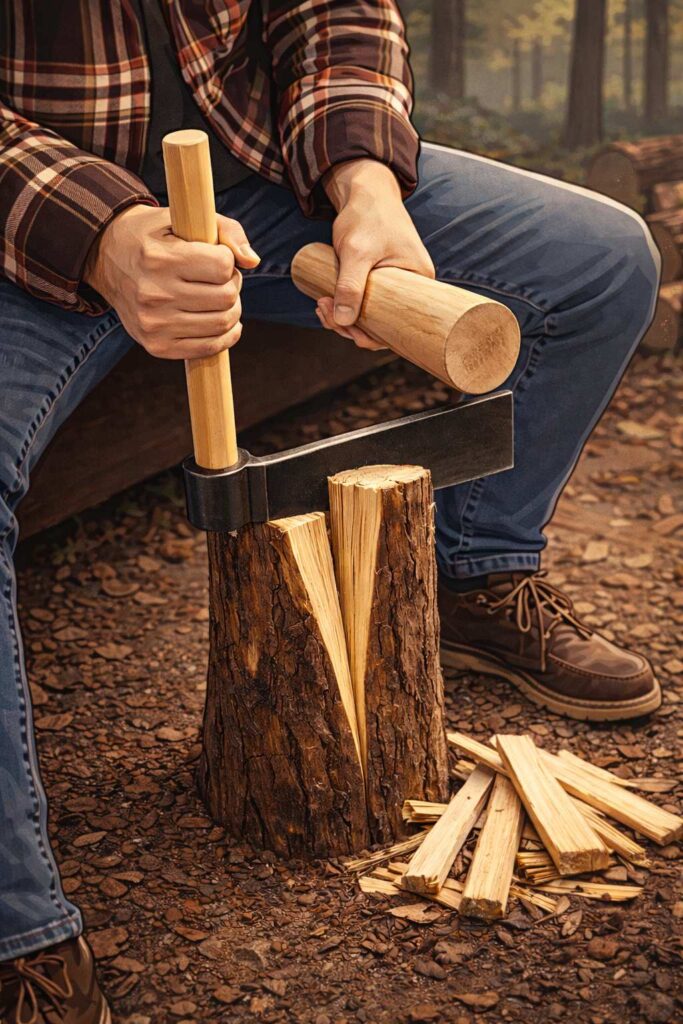
A froe is a traditional wood-splitting tool with a long blade and handle, designed to split wood along the grain using controlled leverage instead of force.
What It’s Used For
The froe is built for precision splitting, especially when working with smaller or more controlled pieces of wood.
Common uses include:
- Splitting kindling safely and consistently
- Breaking down small logs into usable pieces
- Producing thin, even splits for fire-starting
- Shaping wood for simple building or repair work
- Working wood without swinging a blade
Unlike an axe, you’re not striking through the wood—you’re guiding it apart.
Why It Matters
Splitting wood with an axe works—but it comes with risk. Miss a strike, glance off the grain, or lose control of the swing, and things can go wrong quickly.
A froe takes a different approach.
Instead of relying on force, it relies on control. The blade is set into the wood, and the handle is used to lever the grain apart. Your hands stay above the cutting edge, and the work happens in a more deliberate, predictable way.
That matters when you’re producing kindling or working with smaller pieces—exactly the kind of tasks that happen often and get rushed.
In a preparedness setting, that consistency has value. You’re not just splitting wood—you’re doing it safely, with less fatigue, and with more usable output per piece.
It also opens up another way of working with wood. You’re not limited to chopping and breaking—you can split, shape, and control the outcome more precisely. That’s useful for fire prep, basic construction, and small repairs.
There’s also a reliability factor. No moving parts, no power source, no complex setup. Just a blade, a handle, and a method that’s been used for generations.
It’s a slower tool, but not a weaker one. It trades speed for accuracy and safety—and in the right situations, that’s a good trade.
What to Know Before You Get One
A froe is simple, but it’s not something most people are familiar with today. A few things to keep in mind:
- It’s not a replacement for an axe
It handles specific tasks better, but it doesn’t replace heavier splitting work. - Works best with straight-grain wood
Clean splits come from cooperative material. Twisted or knotted wood is less predictable. - You’ll need a mallet or baton
The blade is typically driven into the wood before leverage is applied. - It’s a controlled process
This isn’t fast, high-output work. It’s steady and deliberate. - There’s a learning curve
It’s simple, but different. A little practice goes a long way. - Ideal for repeated small tasks
If you’re making kindling often, this tool quickly proves its value.
This isn’t a flashy tool, and it doesn’t try to be. It does one job well—splitting wood with control instead of force.
When you’re working close, handling smaller pieces, or trying to stay safe while getting the job done, that kind of control is worth having.
Check out The Machete: An Unsung Hero of Prepping and Wilderness Survival