
What It Is
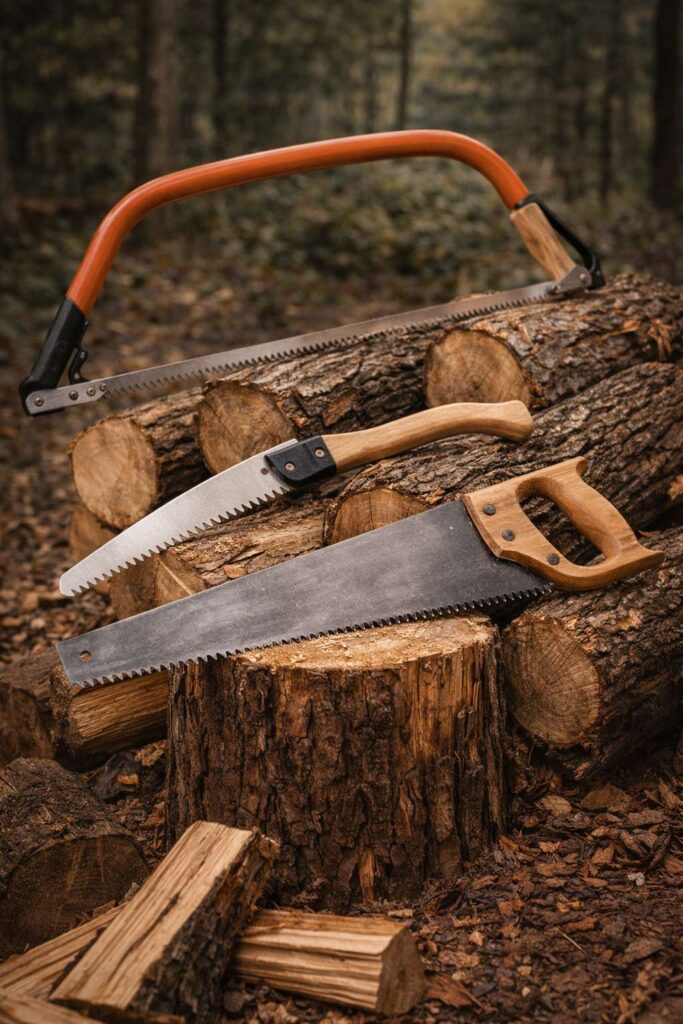
Hand saws are manual cutting tools designed to process wood with control and efficiency, ranging from folding saws to full-size bow and crosscut saws.
What It’s Used For
Saws are built for clean, controlled cutting—something axes and hatchets don’t always handle well.
Common uses include:
- Cutting logs to length for firewood
- Breaking down branches without splitting them
- Trimming lumber for basic building or repair work
- Clearing brush and managing small trees
- Processing wood where precision matters more than force
Different saws handle different jobs. A folding saw is portable and quick for light work. A bow saw handles thicker material. A larger hand saw bridges the gap between rough cutting and more precise work.
Why It Matters
Not every job calls for force. Sometimes you need control. That’s where a saw earns its place.
Axes and hatchets break things apart. Saws divide them cleanly. When you’re working with limited material, or trying to make something fit just right, that difference matters.
In a wood-based environment—whether for fuel, shelter, or repair—you’ll find that not all cuts are the same. Some require accuracy. Some require efficiency. Some require both.
A saw lets you work with the material instead of against it.
It’s also a quieter, more controlled process. You’re not swinging, you’re guiding. That reduces waste, lowers effort over time, and gives you more consistent results.
And like other hand tools, it doesn’t rely on power. No fuel, no electricity, no noise beyond the work itself. Just steady motion and a sharp blade.
That kind of reliability holds value when options narrow.
It also builds skill. You learn how wood behaves, how pressure affects the cut, and how to work efficiently without rushing. Over time, that turns into capability you can rely on.
We have a small selection of hunting and survival saws here!
What to Know Before You Get One
Saws are simple tools, but choosing the right type—and using it well—makes a difference:
- Match the saw to the job
Small folding saws are great for mobility. Larger saws handle heavier work more efficiently. - Blade design matters
Teeth patterns and blade length affect how the saw cuts. Some are built for speed, others for smoother finishes. - Sharpness makes the work easier
A good blade should bite into the wood without forcing it. Dull tools waste time and energy. - Portability vs. capability
Compact saws are easy to carry but limited in size. Larger saws do more but take up space. - Control over speed
Rushing leads to poor cuts. A steady rhythm gets better results with less effort. - Storage and protection
Keep blades clean and protected. A damaged blade reduces performance quickly.
A saw isn’t complicated, but it rewards good habits. It’s a tool you grow into, not something you outgrow.
When everything leans toward speed and power, a hand saw brings things back to control and precision—cutting what you need, cleanly and consistently, with nothing more than your own effort.
Check out The Machete: An Unsung Hero of Prepping and Wilderness Survival