
What It Is
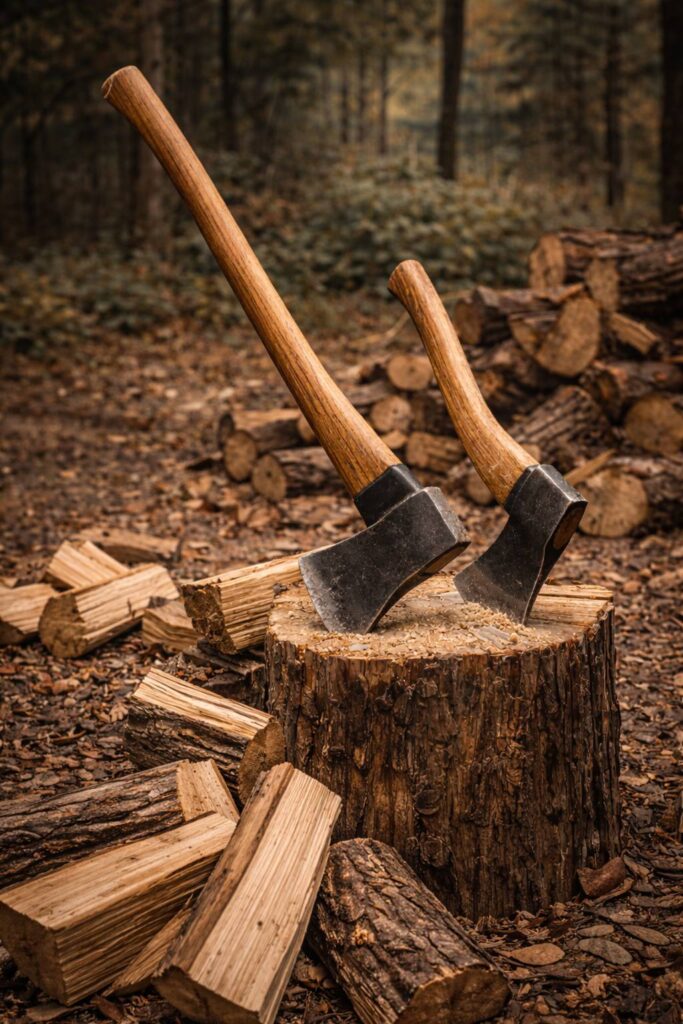
Axes and hatchets are hand tools designed for cutting, splitting, and shaping wood, ranging from small one-handed tools to larger, two-handed working axes.
What It’s Used For
These tools show up anywhere wood needs to be processed, shaped, or managed.
Common uses include:
- Splitting firewood for cooking and heat
- Chopping and limbing branches
- Processing small logs for kindling or building
- Clearing brush and maintaining land
- Shaping wood for basic construction or repairs
Different sizes and styles exist for a reason. A small hatchet handles light work and travel. A full-size axe handles volume and heavier tasks.
Why It Matters
In a world where most people rely on powered tools, it’s easy to forget how much work can still be done by hand.
Wood remains one of the most accessible and useful materials around—fuel, shelter, tools, and repairs all tie back to it. If you can process wood, you unlock a wide range of capabilities.
An axe or hatchet gives you that access without needing fuel, electricity, or complex systems.
That matters when options get limited.
If you’re heating with wood, cooking over fire, or building anything simple, you need a way to break down raw material into usable pieces. Without the tool—or without the skill—you’re stuck relying on what’s already processed.
There’s also a rhythm to it. Hand tools slow you down in a good way. You pay attention to what you’re doing, you work with the material instead of forcing it, and you build a kind of efficiency that doesn’t depend on speed alone.
Over time, that turns into confidence. You’re not guessing how to get something done—you’ve done it before, with your own hands.
Axes and hatchets aren’t complicated. They’re honest tools. They do exactly what you ask of them, no more, no less.
What to Know Before You Get One
These tools are simple, but choosing and using them well makes a difference:
- Size should match the work
A hatchet is convenient, but limited. A full axe handles more, but takes effort to carry and use. - Not all axes are the same
Splitting, chopping, and carving axes have different shapes and purposes. One tool rarely does everything equally well. - Sharpness is critical
A dull blade works against you. A sharp one works with you. - Handle quality counts
A solid handle improves control and durability. Poor handles lead to frustration and breakage. - Technique matters more than strength
Good form does more than brute force. This is a skill tool, not just a heavy one. - Storage and care are simple but important
Keep it dry, protected, and maintained. Neglect shortens the life of even the best tools.
This isn’t gear you buy and forget. It’s something you learn to use over time.
When everything around you leans toward powered convenience, a good axe or hatchet brings you back to something simpler—work you can do anywhere, with nothing more than the tool in your hand.
Check out The Machete: An Unsung Hero of Prepping and Wilderness Survival