
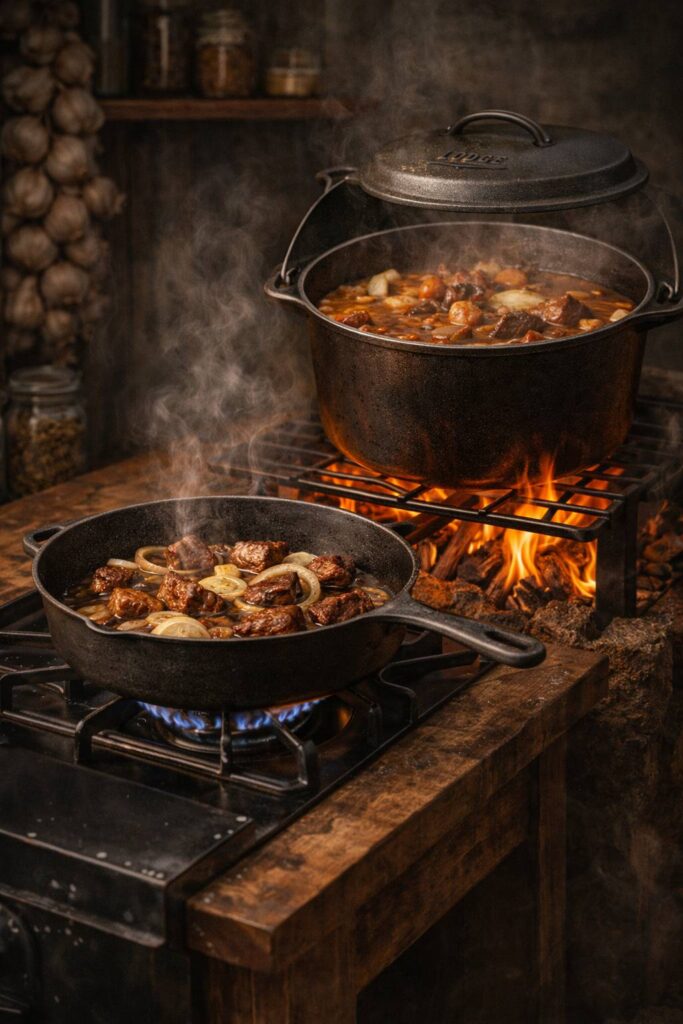
What It Is
Cast iron cookware is heavy-duty, heat-retaining kitchenware made from solid iron, designed for cooking over a wide range of heat sources.
What It’s Used For
Cast iron earns its place by doing a lot of jobs well without needing much from you.
Common uses include:
- Frying, searing, and browning meats
- Baking cornbread, biscuits, and simple meals
- Cooking over open flame, stovetop, or oven
- Simmering stews and one-pot dishes
- Reheating food evenly without hotspots
It’s the kind of cookware that adapts to how you cook, instead of forcing you to adapt to it.
Why It Matters
Most modern cookware is built around convenience—nonstick coatings, lightweight materials, and easy cleanup. That works fine until those coatings wear out, scratch, or fail under higher heat.
Cast iron takes a different approach.
It’s simple, solid, and built to last. There’s no coating to degrade, no reliance on delicate materials. What you have is a piece of cookware that can handle high heat, open flame, and repeated use without losing function.
That matters when conditions change.
If power is inconsistent or you’re cooking over alternative heat sources, cast iron keeps working. It doesn’t care if the heat comes from a stovetop, a fire, or a set of coals. That flexibility is hard to replace.
It also builds skill. Cooking with cast iron teaches temperature control, patience, and attention. You don’t just turn a dial and walk away—you learn how heat behaves and how food responds to it.
Over time, that creates confidence. You’re not dependent on a specific appliance or a fragile pan—you’re working with a tool that responds the same way every time.
And unlike most modern cookware, cast iron doesn’t have an expiration date. It doesn’t get replaced every few years. It becomes part of your kitchen for the long haul.
What to Know Before You Get One
Cast iron is straightforward, but it comes with its own set of realities:
- It’s heavy
That weight is part of its strength, but it’s something to be aware of in daily use. - It needs basic care
You don’t have to baby it, but you do need to keep it dry and lightly seasoned to prevent rust. - It heats slowly, but holds heat well
You’re not chasing quick adjustments—you’re working with steady, retained heat. - It’s not truly nonstick
With use and proper care, it improves—but it won’t behave like coated pans. - Size and shape matter
A few well-chosen pieces go further than a full set you don’t use. - It works best when you use it regularly
Sitting unused does more harm than good. These pans are meant to stay in rotation.
This isn’t complicated gear. It’s a return to something simpler—solid material, steady heat, and a tool that does its job without needing much in return.
When everything else leans toward disposable, cast iron stands out by doing the opposite.