
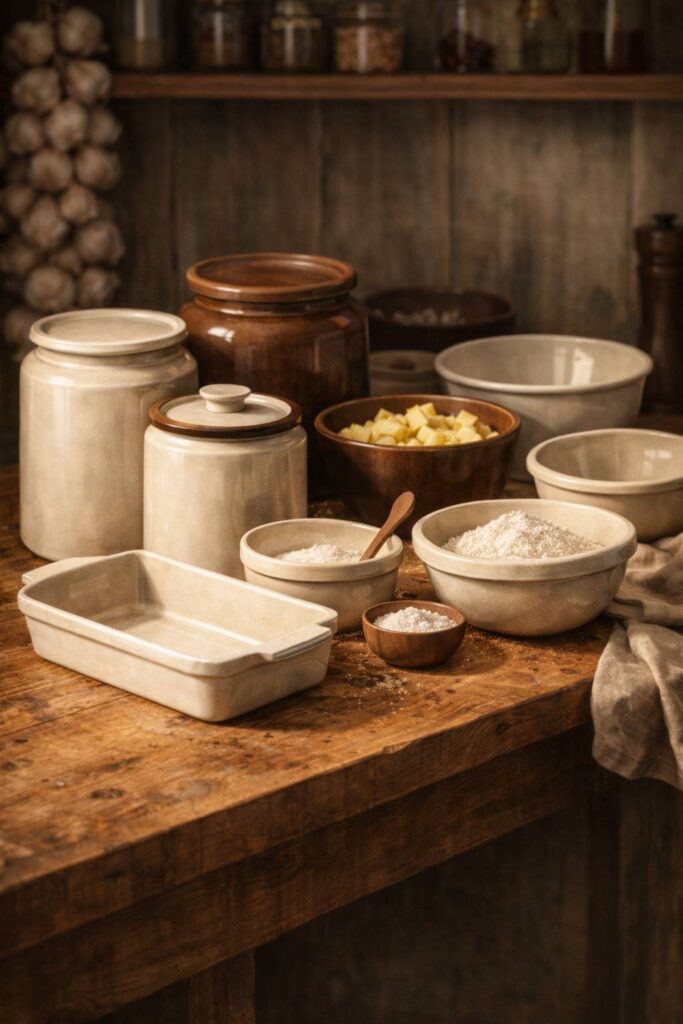
What It Is
Ceramic and crockery dishes are kiln-fired, non-metal kitchen vessels used for cooking, serving, and storing food—built to last and meant to be used again and again.
What It’s Used For
These pieces show up across the kitchen, not as specialty tools, but as dependable, everyday workhorses.
Common uses include:
- Baking casseroles, breads, and simple meals
- Serving food without transferring to another dish
- Storing leftovers or prepared ingredients
- Fermenting or holding foods during preparation
- Using as durable mixing or prep vessels
They’re not flashy, but they handle a wide range of tasks without needing much thought.
Why It Matters
Modern kitchens lean hard on convenience—plastic containers, disposable materials, and lightweight alternatives that work well until they don’t. They crack, warp, stain, or get tossed and replaced.
Ceramic doesn’t play that game.
It’s stable, reusable, and built for long-term use. It doesn’t rely on constant replacement cycles, and it doesn’t degrade the same way plastics do over time. What you buy today is likely still usable years down the road.
That matters more than it seems.
In a disruption scenario, durability becomes more important than convenience. You’re not replacing things easily. You’re relying on what you already have. Ceramic dishes hold up under heat, repeated use, and time without needing much from you in return.
There’s also a simplicity factor. Ceramic doesn’t care about power, electronics, or compatibility. It works the same way it always has. That kind of consistency has value when other systems start getting unpredictable.
And then there’s the everyday side of it. These dishes encourage habits that align with preparedness—cooking at home, storing food properly, and maintaining a kitchen that functions without constant inputs.
It’s not a dramatic shift. It’s just a quieter, more durable way of doing things.
What to Know Before You Get One
Ceramic and crockery are straightforward, but a few considerations are worth keeping in mind:
- Weight is part of the tradeoff
These pieces are heavier than plastic or thin metal. That’s part of what makes them durable. - Not all ceramics are equal
Thicker, well-fired pieces tend to last longer and handle heat better. - They can break if mishandled
Durable doesn’t mean indestructible. Drops and sudden temperature changes can crack them. - Size and shape matter
Think about how you actually cook and store food. Practical shapes get used more. - They’re meant to be used, not stored away
These aren’t decorative pieces. The value comes from regular, everyday use. - They replace multiple items
A good ceramic dish can handle cooking, serving, and storage, reducing the need for extra containers.
This isn’t about collecting kitchenware. It’s about choosing pieces that hold up, do their job, and stay useful over time.
When everything around you trends disposable, there’s value in owning a few things that aren’t.