
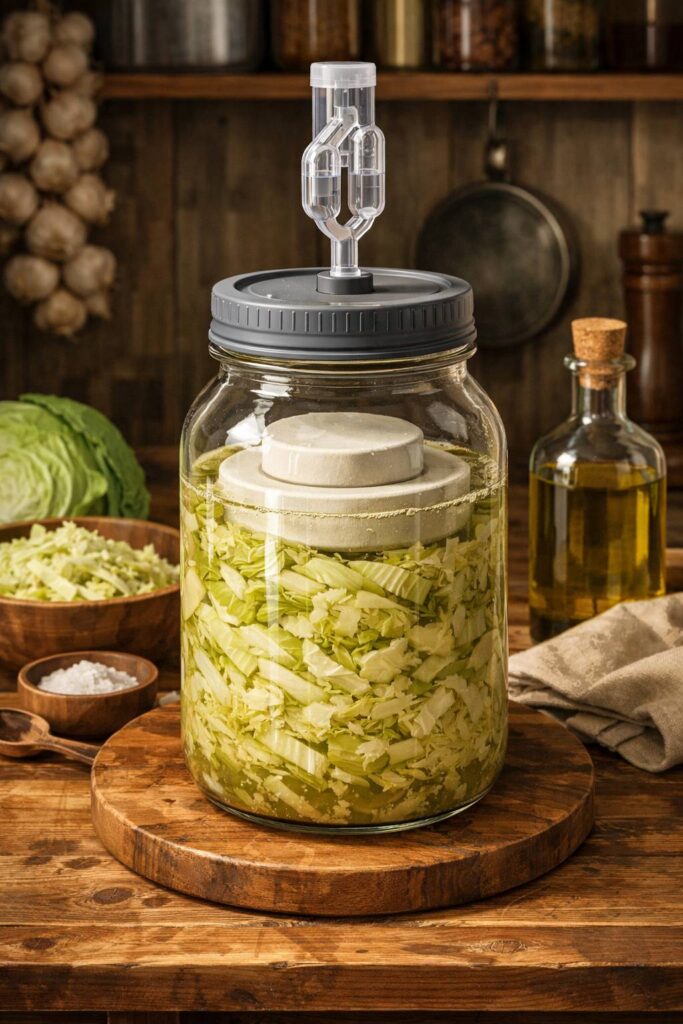
What It Is
A simple glass jar fermentation set with a lid, airlock, and weights—everything needed to start making small batches of fermented foods at home.
What It’s Used For
This kind of setup is meant for controlled, small-batch fermentation. It gives you a clean, repeatable way to learn the process without overcomplicating it.
Common uses include:
- Sauerkraut and kimchi
- Pickled vegetables (carrots, cucumbers, peppers)
- Small test batches before scaling up
- Learning timing, taste, and texture through repetition
It’s not about volume—it’s about getting your hands into the process and understanding how it behaves.
Why It Matters
Fermentation is one of the oldest preservation methods there is. It doesn’t rely on electricity, doesn’t require complex equipment, and turns simple ingredients into something that lasts longer and often tastes better.
Learn more with Fermentation for Preppers: Sauerkraut, Kimchi, and More
Starting small matters.
Most people fail at food preservation because they try to do too much too fast. Large crocks, big batches, and guesswork lead to wasted food and frustration. A small, contained setup like this lowers the barrier. You can learn quickly, make mistakes cheaply, and build confidence with each batch.
In a disrupted environment, that skill carries weight. Being able to preserve vegetables without a freezer or pressure canner gives you options. It stretches your food supply and reduces dependence on systems that may not always be there.
It also builds a habit. Once you know how to ferment a jar of cabbage, you’re not guessing anymore—you’re producing.
What to Know Before You Get One
This type of set is straightforward, but a few things are worth keeping in mind:
- Small batches are the point
Don’t expect volume. This is for learning and steady use, not bulk storage. - Cleanliness matters
You don’t need sterile conditions, but you do need to keep things reasonably clean. Sloppy habits lead to spoiled batches. - Temperature affects everything
Fermentation speeds up or slows down depending on your environment. Cooler spaces take longer, warmer ones move faster. - The airlock is there for a reason
It lets gas escape while keeping outside air out. That helps keep things stable and predictable. - Weights keep food submerged
If vegetables float above the liquid, problems follow. The weights aren’t optional—they’re part of making it work. - Taste develops over time
You’re not looking for instant results. Flavor deepens as it sits. Learning when something is “ready” comes with doing it a few times.
Check out this 3 liter Kilner Create & Make Fermentation Set.
This isn’t complicated gear, but it rewards attention. Treat it like a tool you’re learning, not a gadget you’re testing.
At the end of the day, this kind of setup isn’t about the jar—it’s about what it teaches you. Start with something manageable, get a few wins under your belt, and build from there. That’s how real capability develops—one batch at a time.
Disclaimer: As an Amazon Associate we earn from qualifying purchases. This doesn’t change your price – it helps support the site.