
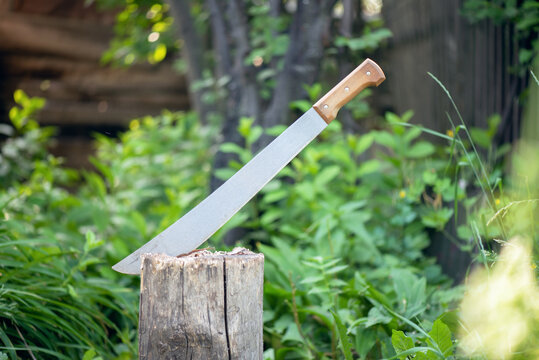
There’s a temptation in preparedness culture to chase the newest gadget or the flashiest tactical piece. That’s fine for reviews and unboxings — but when you strip everything away and ask what still works after the noise dies down, old-school tools keep coming up. The machete is one of those tools: simple, widely available, and effective across a surprising number of survival tasks. It’s not a cure-all, but when chosen and used intelligently, it gives a small team a big return on investment.
Why a Machete Matters
Think of the machete as a multipurpose clearing and processing tool. It bridges the gap between a compact survival knife and a two-handed axe — lighter and faster than an axe, more capable for heavy vegetation work than a folder.
For preppers who value mobility, redundancy, and low-dependency tools (no fuel, no batteries, no complicated maintenance), the machete checks a lot of boxes.
Where It Shines
- Wilderness utility: trailblazing, clearing brush, cutting poles or saplings for shelter framing, turning dense undergrowth into manageable firewood.
- Food work: butchering small game, breaking down plant material for foraging, and prepping larger pieces of wood for cooking.
- Defensive posture: a large, well-presented blade can deter threats without immediately resorting to a firearm.
- Low-tech reliability: no ammo, no power, easy to maintain in austere environments.
Choosing the Right Machete
There’s no single “best” machete — it’s about matching blade geometry and length to your environment and tasks.
Blade Length & Shape
- Short (12–16″) – Quick and controllable for close or detailed work.
- Mid (16–20″) – Balanced reach and control, ideal for general use.
- Long (20″+) – Excellent for heavy brush clearing, less ideal for confined spaces.
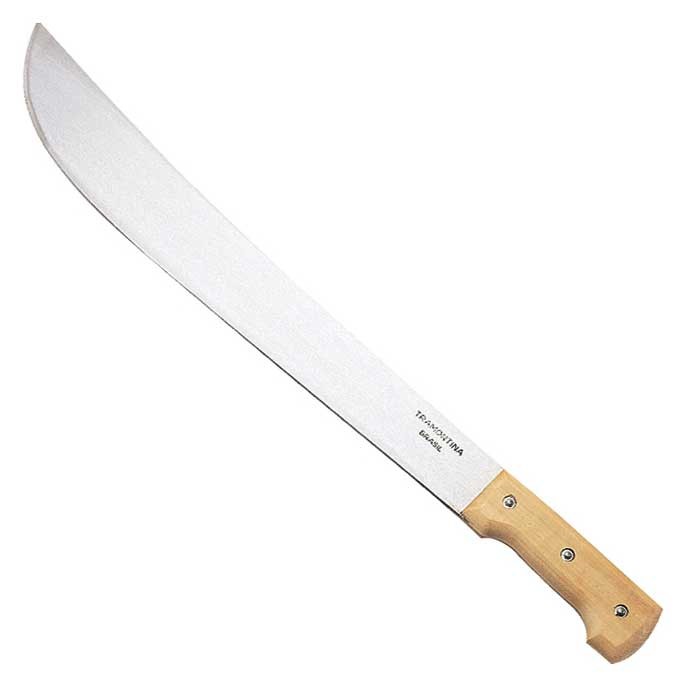
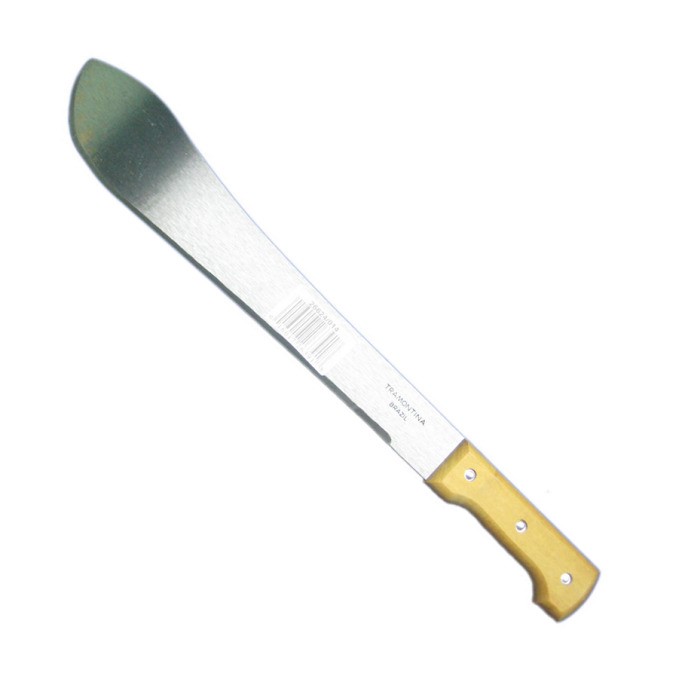
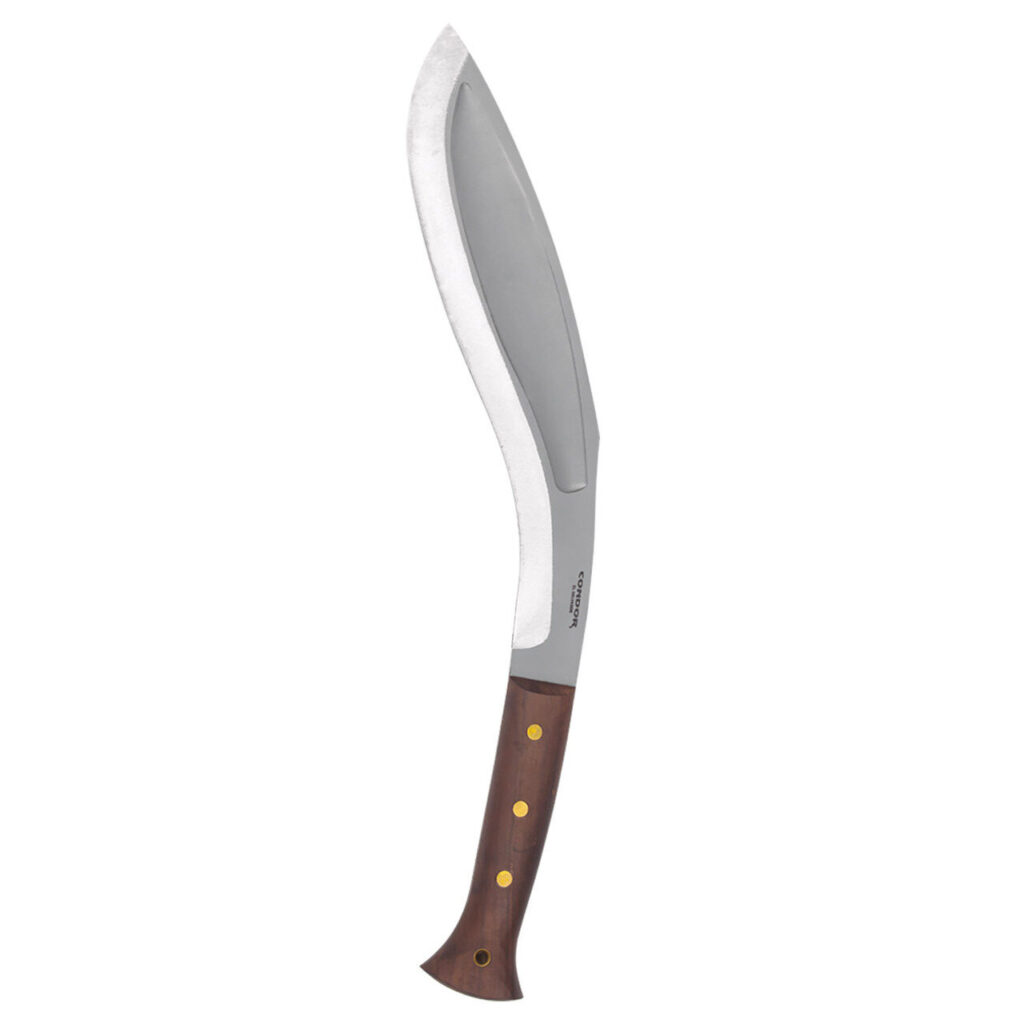
Common shapes:
Steel & Construction
- Carbon steel: Holds an edge well and sharpens easily; requires oiling to prevent rust.
- Stainless steel: Low maintenance and corrosion-resistant; harder to sharpen in the field.
Full-tang or through-tang construction ensures durability — avoid partial tangs that can fail under torque.
Handle & Sheath
Prioritize grip comfort and safety. Micarta, G-10, or sealed hardwoods offer secure handling. Sheaths of heavy canvas or kydex are preferred over brittle plastics.
Recommended Examples
If you’re new to machetes, start by comparing a few proven styles rather than chasing gimmicks. Each design has earned its place through decades of field use:
- Check out our selection of machetes!
- Ontario 18″ Military Machete – A U.S. classic with a simple, full-tang carbon steel build. Tough, no-nonsense, and easy to sharpen in the field. Check these options out at OKC’s Amazon store.
- Tramontina Bolo Machete – A workhorse favored across South America for clearing brush and cutting poles. Excellent weight-forward balance for chopping efficiency. Check these options out at Tramontina’s Amazon store.
- Cold Steel Kukri Machete – Brings the traditional Nepali curve into a modern survival blade. Ideal for those who want extra chopping power in a shorter package. Check these options out on Amazon.
These aren’t luxury blades—they’re field tools. Pick one, use it, maintain it, and you’ll understand why the machete’s reputation has survived for centuries.
Training, Safety, and Etiquette
A machete is not a toy. A few practical ground rules:
- Practice matters: bad technique leads to fatigue and injuries. Learn controlled arcs and stance.
- Use PPE: gloves, eye protection, and sturdy boots. Keep your work area clear.
- Carry smart: know your local blade laws and avoid unnecessary open carry in populated areas.
- Sharpen regularly: a dull machete is more dangerous than a sharp one. Clean, oil, and inspect it after every use.
Maintenance & Edge Care
- Keep a small file or stone in your kit for quick field sharpening.
- Oil the blade (especially carbon steel) after use to prevent corrosion.
- Store sheathed and dry; inspect handle fasteners periodically.
A sharp, maintained machete is efficient and safer — requiring less force and providing more control.
Do yourself a favor, pick up a Work Sharp Knife & Tool Sharpener, WITH extra belts.
Integrating a Machete into Your Preparedness Plan
A machete doesn’t replace other tools — it complements them. Think of it as a force multiplier for time, energy, and versatility.
Practical placements:
- Base kit: one or two reliable machetes for vegetation management and heavy chores.
- Vehicle kit: a compact mid-length machete for evac routes or roadside clearing.
- Training rotation: include machete handling in skills days to stay proficient.
Minimalist note:
If pack weight is critical, a 14–16″ bolo or kukri variant can serve as your all-in-one cutting solution.
Common Mistakes to Avoid
- Buying a blade that’s too long or poorly balanced.
- Skipping training and technique.
- Neglecting edge care — rust and dullness shorten lifespan fast.
Legal & Ethical Use
Machetes are tools, but length and context can affect legality. Always check your local and state regulations before carrying or transporting one.
Be mindful of how it’s displayed in public — preparedness doesn’t mean provoking concern.
Quick Checklist
- Choose the right length and steel ✅
- Secure, comfortable handle ✅
- Quality sheath ✅
- Practice technique and safety ✅
- Maintain edge and oil regularly ✅
Closing Thought
The machete isn’t glamorous — and that’s the point. In a world obsessed with high-tech fixes, this centuries-old tool still solves real problems. It’s a perfect embodiment of practical resilience: low-tech, reliable, and ready for work when modern systems fail.
For the prepper mindset, that’s what true readiness looks like.
We’ve covered more on similar topics in other Gear & Accessories posts – check them out. Need supplies for your own preparedness plan? Check out our selection of knives, ammo, gear, mags, parts, supplies, tools, etc.
Disclaimer: As an Amazon Associate we earn from qualifying purchases. This doesn’t change your price – it helps support the site.